The archive
Mushroom species
Each species page links to the cultures that use it, and covers habitat, chemistry, ritual role, and what stays uncertain. A cultural and historical reference — not a cultivation or consumption guide.
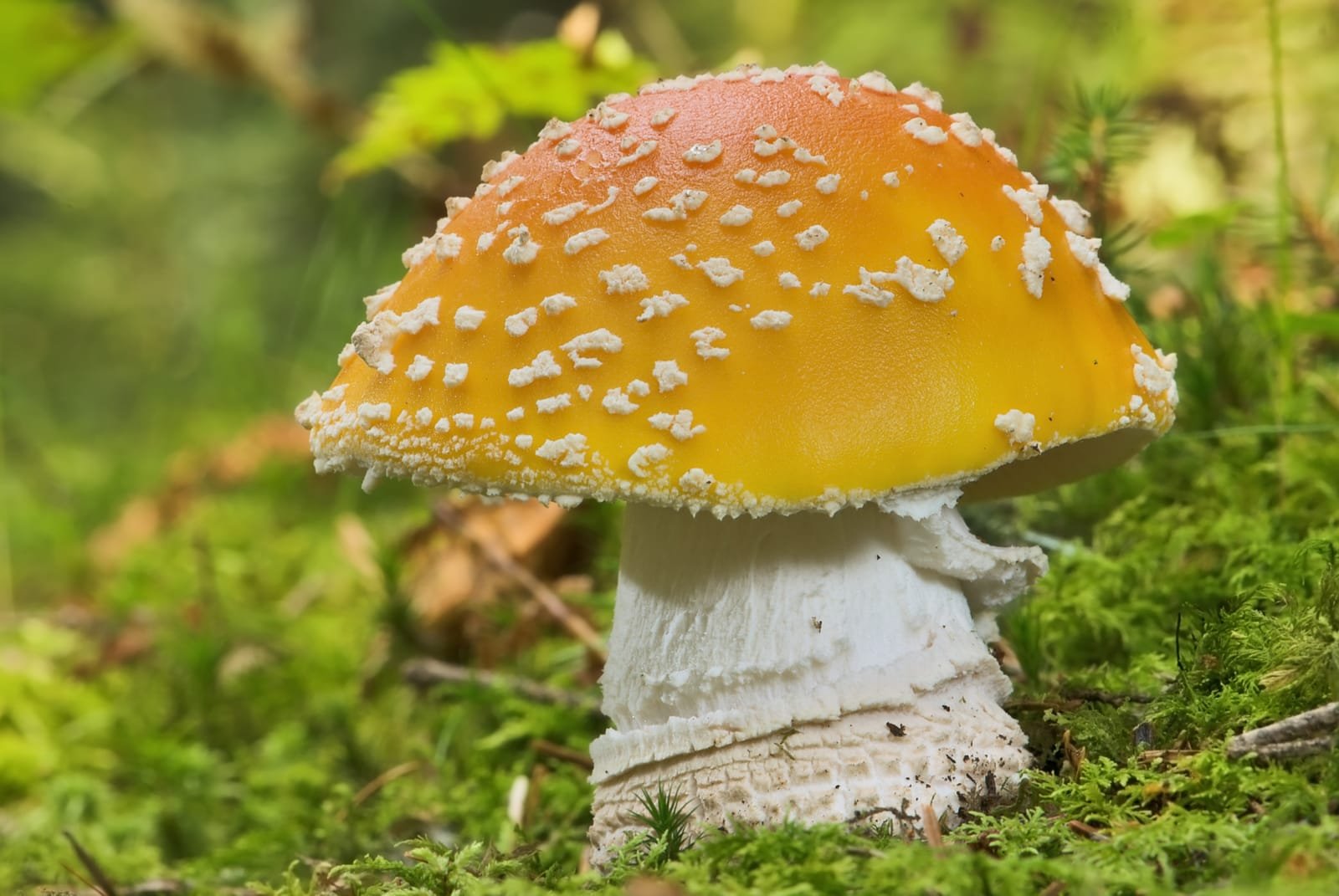
Amanita muscaria
Fly agaric · fly amanitaThe fly agaric — a genuinely toxic, muscimol-bearing mushroom (not a psilocybin species) at the centre of documented Siberian ritual use and a long train of disputed theories, from Soma to berserkers to Christmas.
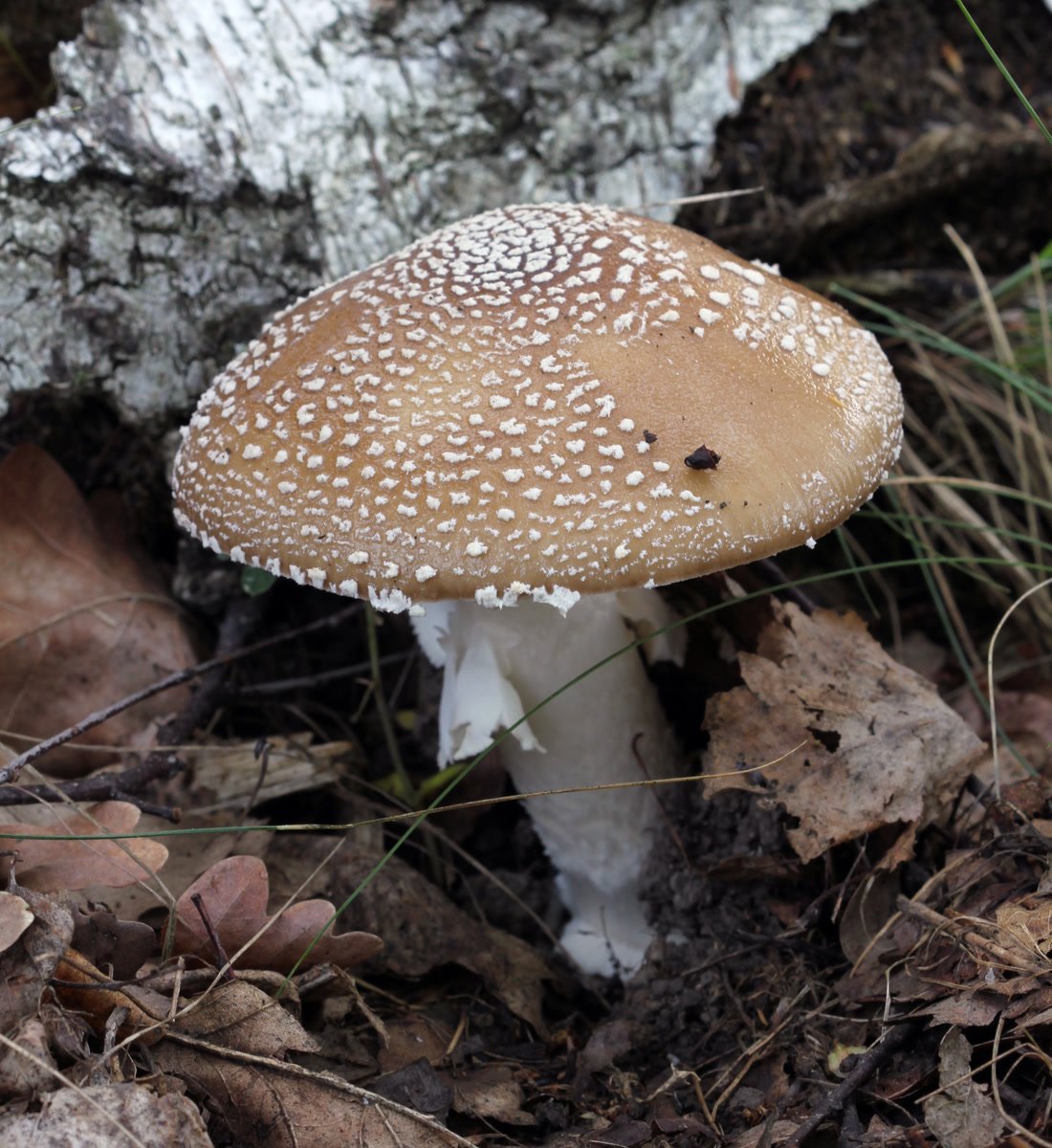
Amanita pantherina
Panther Cap · panther amanitaThe panther cap — fly agaric's browner, more dangerous cousin. It carries the same muscimol chemistry at higher and more erratic doses, and is a genuinely toxic mushroom that poisons people every year. A muscimol species, not a psilocybin one.
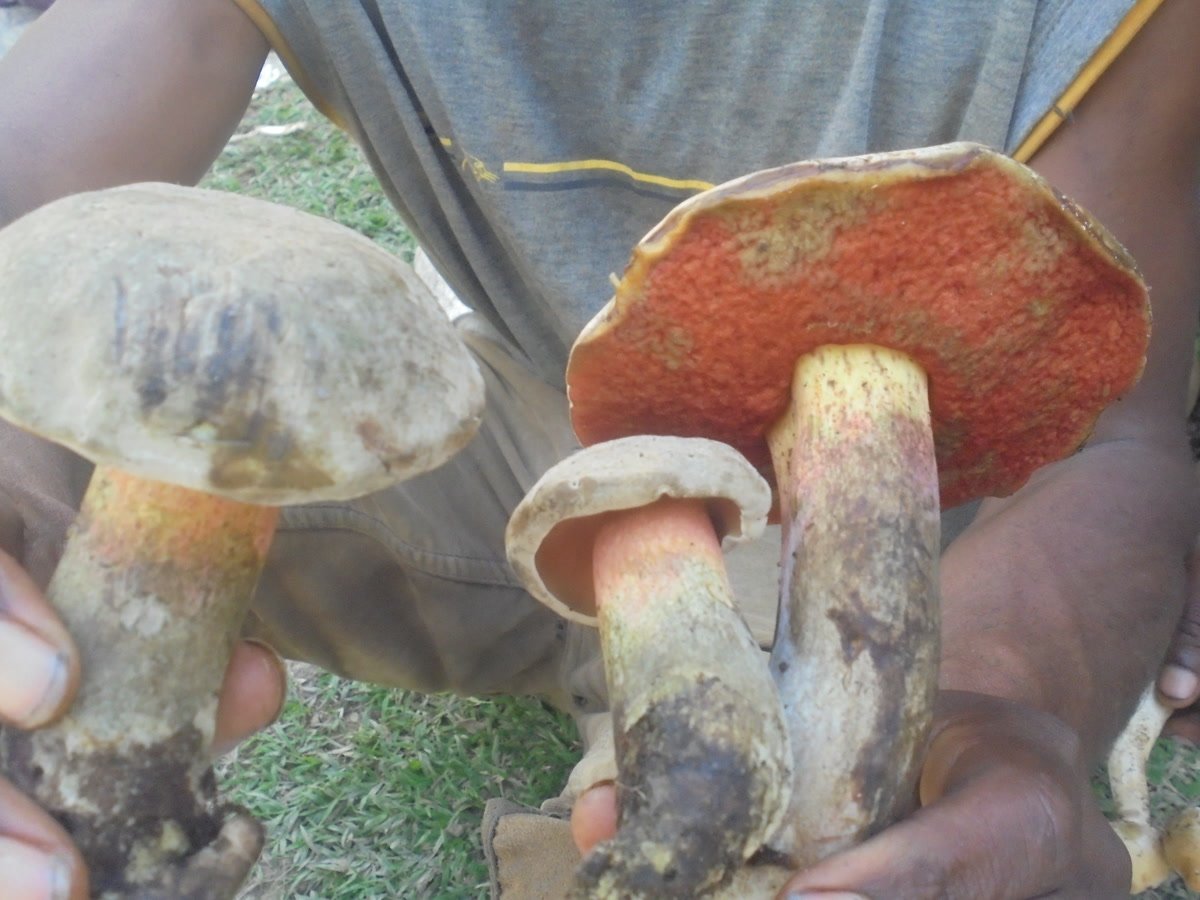
Boletus manicus
nonda (a name applied broadly to several boletes)The vivid bolete at the centre of the New Guinea 'mushroom madness' — identified by Roger Heim among the Kuma of the Wahgi Valley, and famous precisely because the psychoactivity attributed to it was never confirmed.
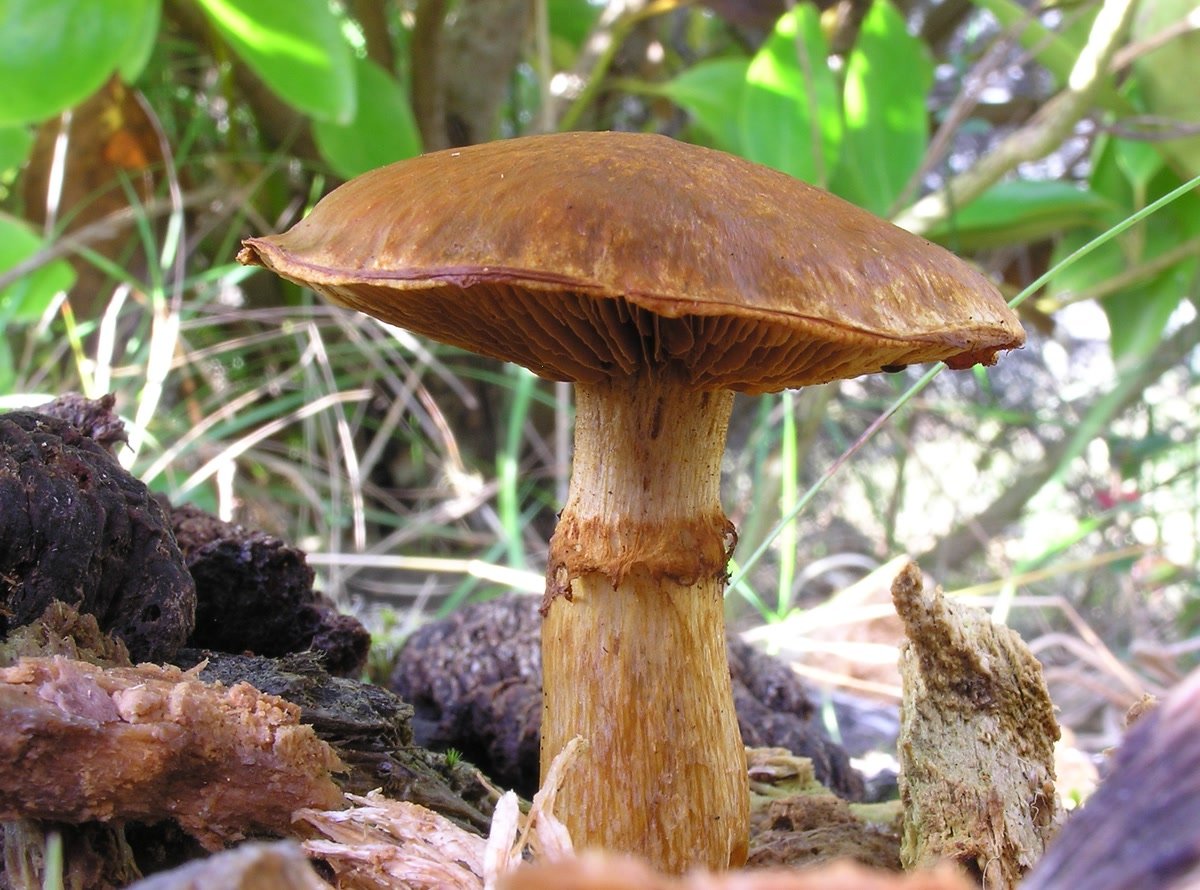
Gymnopilus junonius
Laughing Gym · spectacular rustgillThe 'Laughing Gym' — a large, bitter, wood-rotting orange mushroom whose psilocybin-bearing forms are linked to one of the oldest written mushroom stories on earth: Japan's waraitake, the laughing mushroom of a thousand-year-old tale.
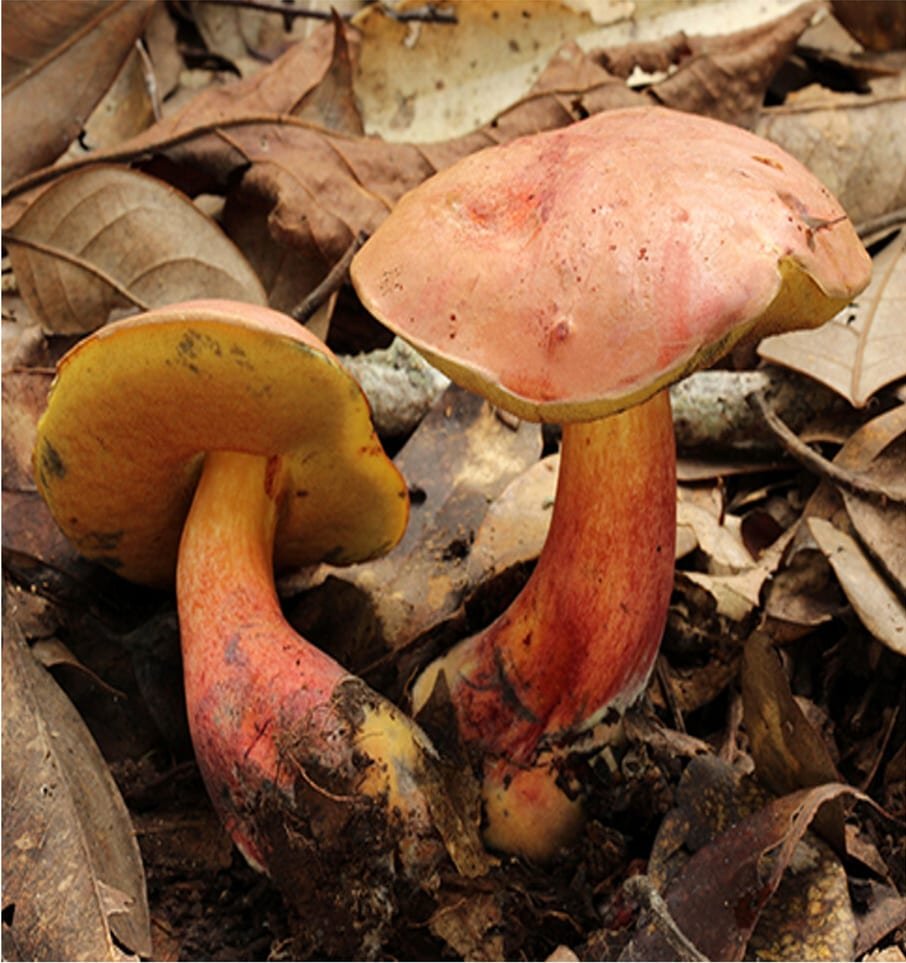
Lanmaoa asiatica
Little-people bolete · 見手青 jiàn shǒu qīng (blue-bruising bolete, Yunnan)A blue-bruising Asian bolete — no gills, no psilocybin, no muscimol — reported to bring vivid visions of tiny people. Communities in Yunnan, Papua New Guinea, and the northern Philippines describe the same effect independently, and no one yet knows what compound causes it.
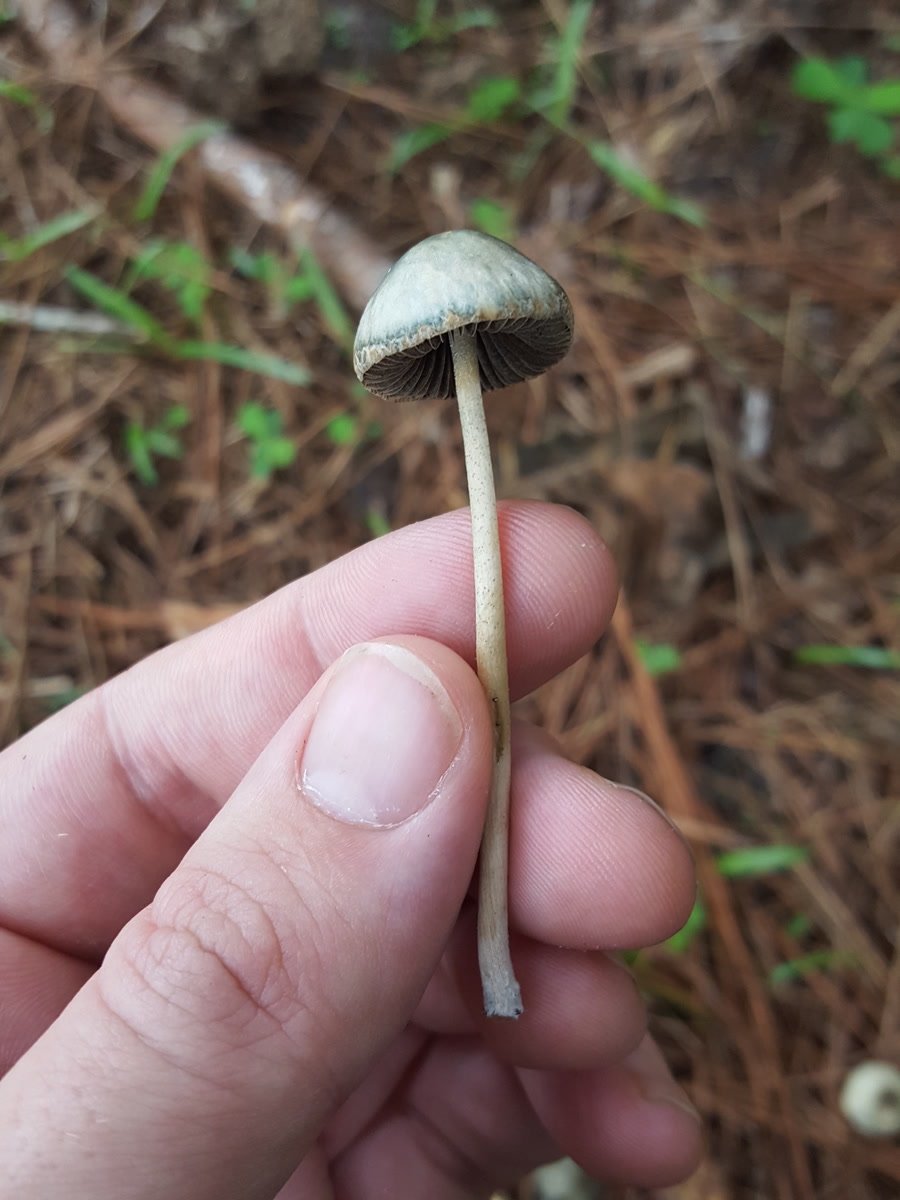
Panaeolus cyanescens
Blue Meanies · Copelandia cyanescens (former name)'Blue Meanies' — a small, intensely potent, pantropical dung mushroom in a different genus from Psilocybe, once placed in Copelandia, and among the strongest psilocybin species anywhere.
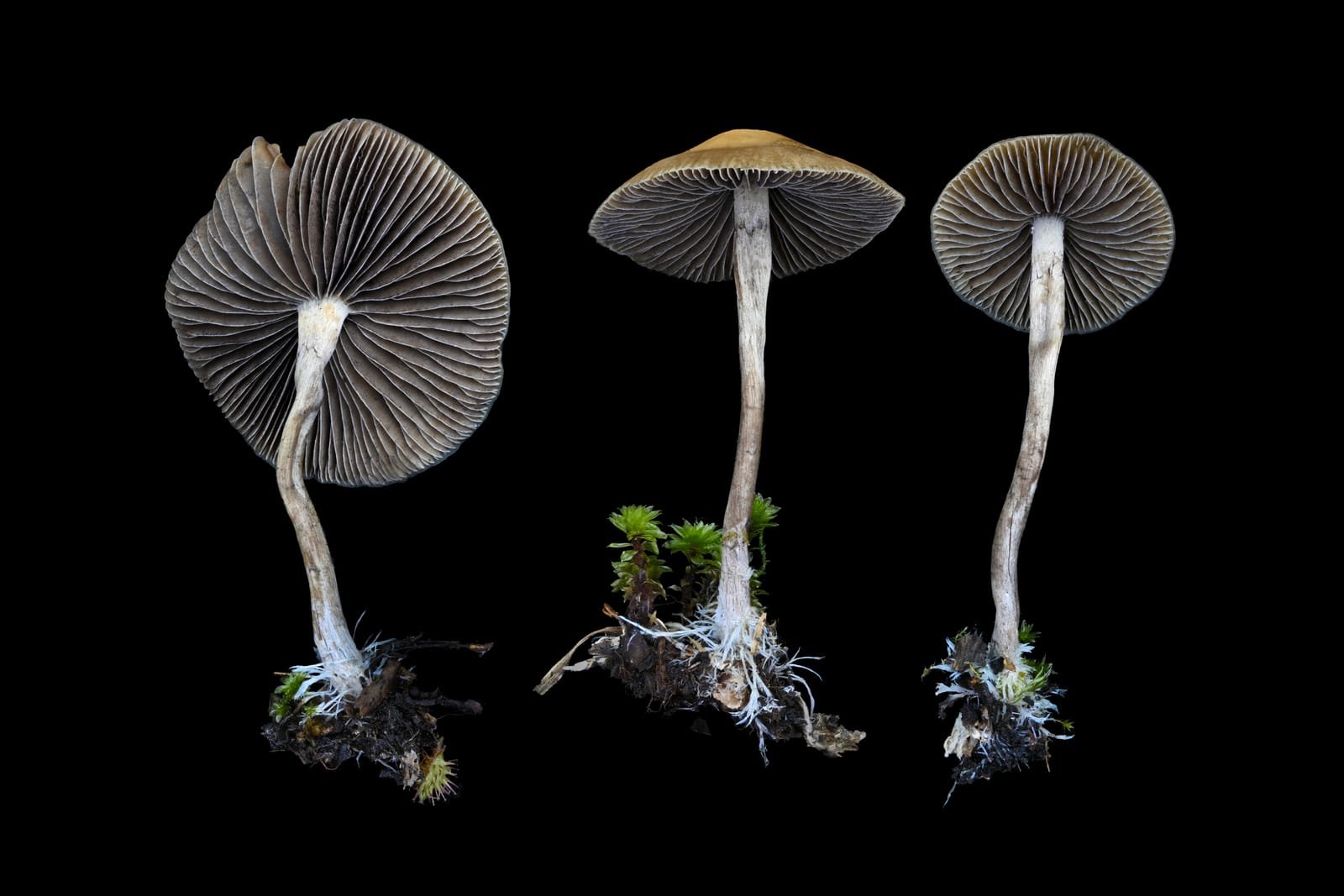
Psilocybe aztecorum
apipiltzin (local Nahuatl)A high-altitude mushroom of central Mexico's great volcanoes, recorded among contemporary Nahua under the name apipiltzin.
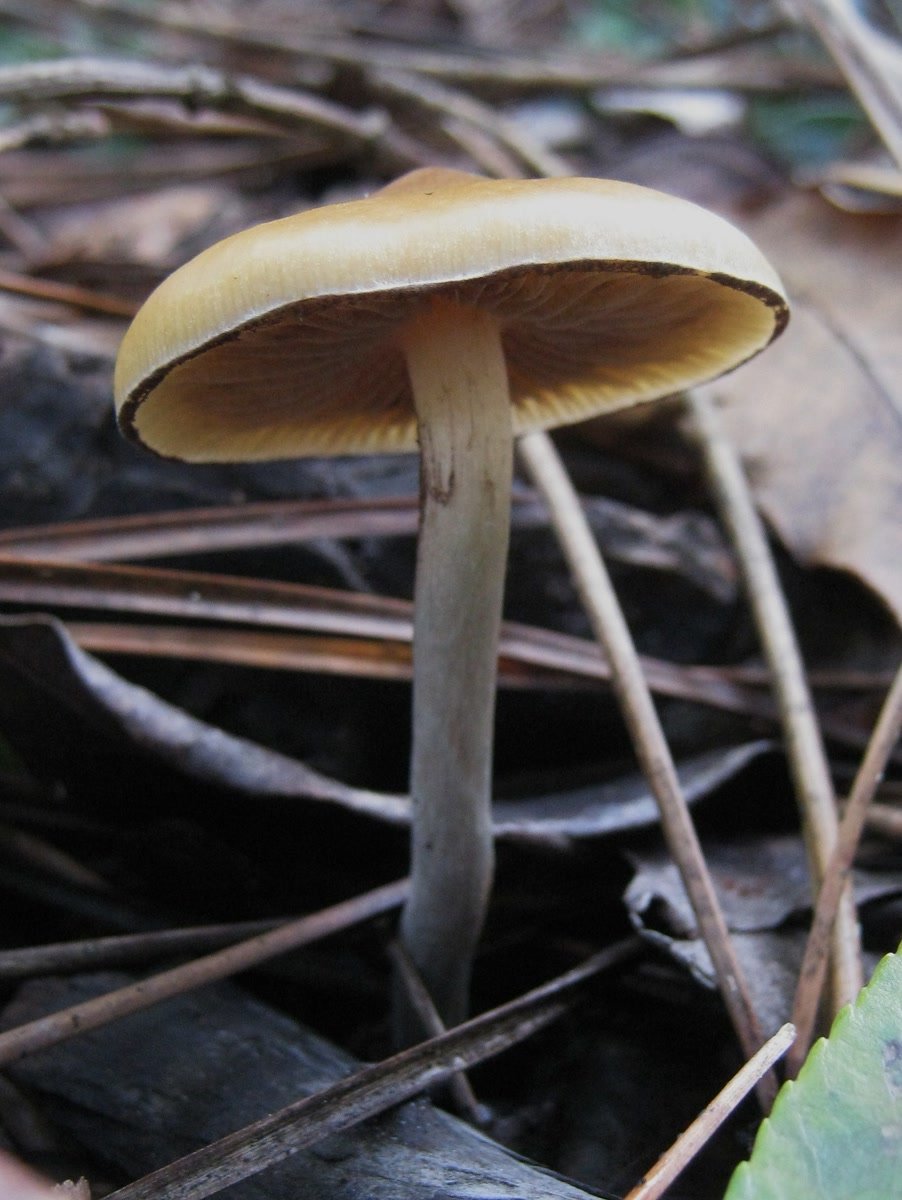
Psilocybe azurescens
Flying Saucer · Azzies'Flying Saucers' — among the most potent psilocybin mushrooms known, described from the Oregon coast by Paul Stamets and Jochen Gartz, growing on driftwood and dune-grass roots at the edge of the Pacific.
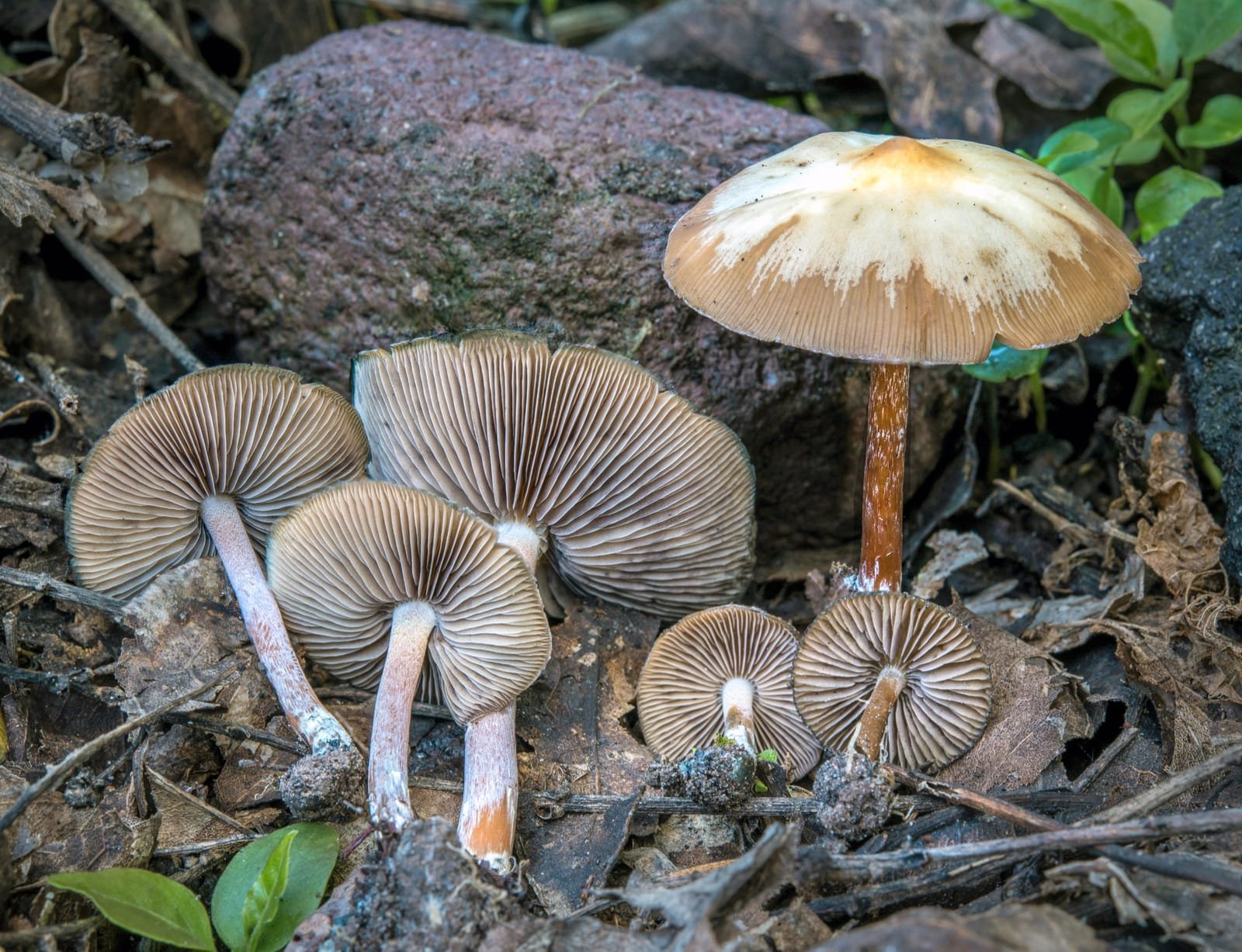
Psilocybe caerulescens
Derrumbe · landslide mushroomThe 'landslide mushroom' of highland Mexico — the derrumbe — central to Mazatec veladas and identified with the Nahua name teotlaquilnanácatl.
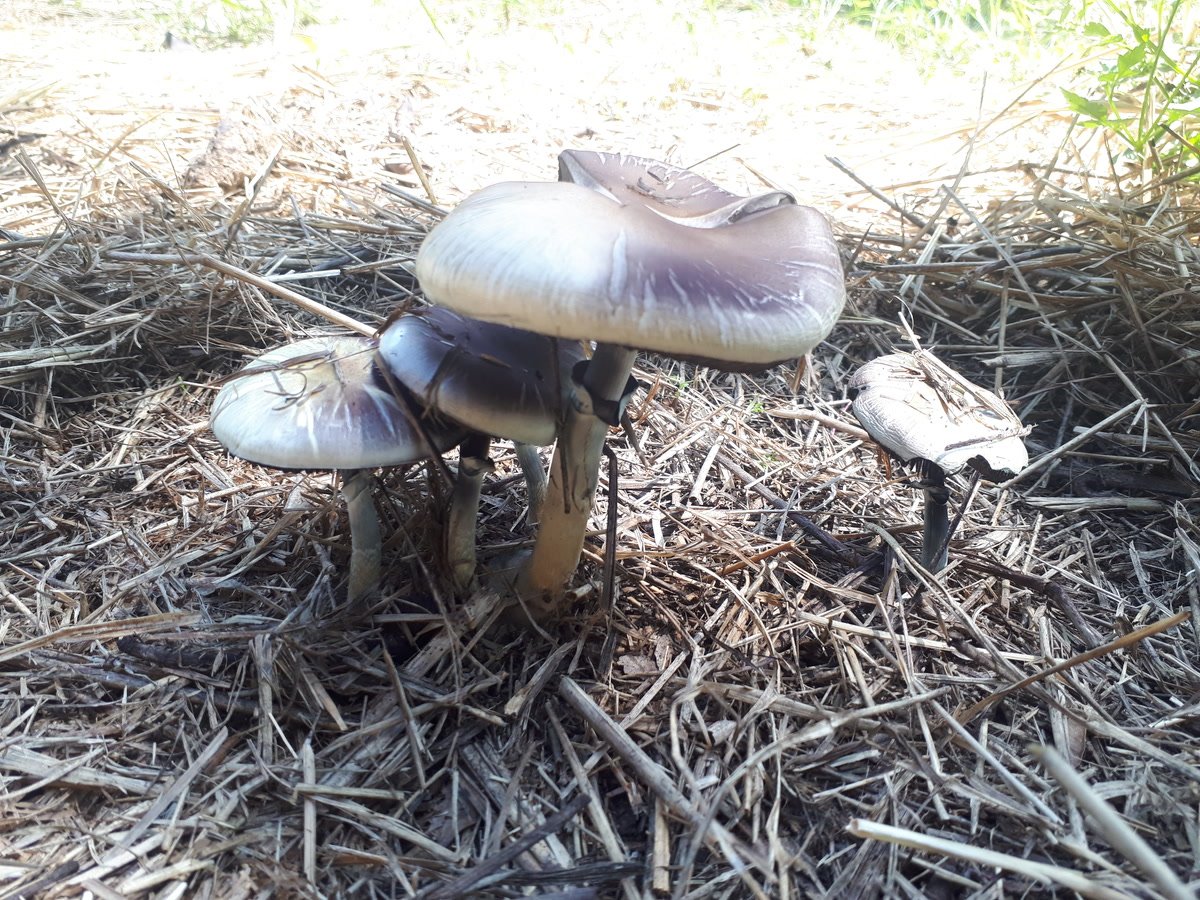
Psilocybe cubensis
San Isidro · Golden Teacher (a cultivated strain name)The most widely known psilocybin mushroom on earth — a dung-loving, pantropical species that travelled the world with cattle, became the mainstay of cultivation, and enters some Mexican ceremonies as the hongo de San Isidro.
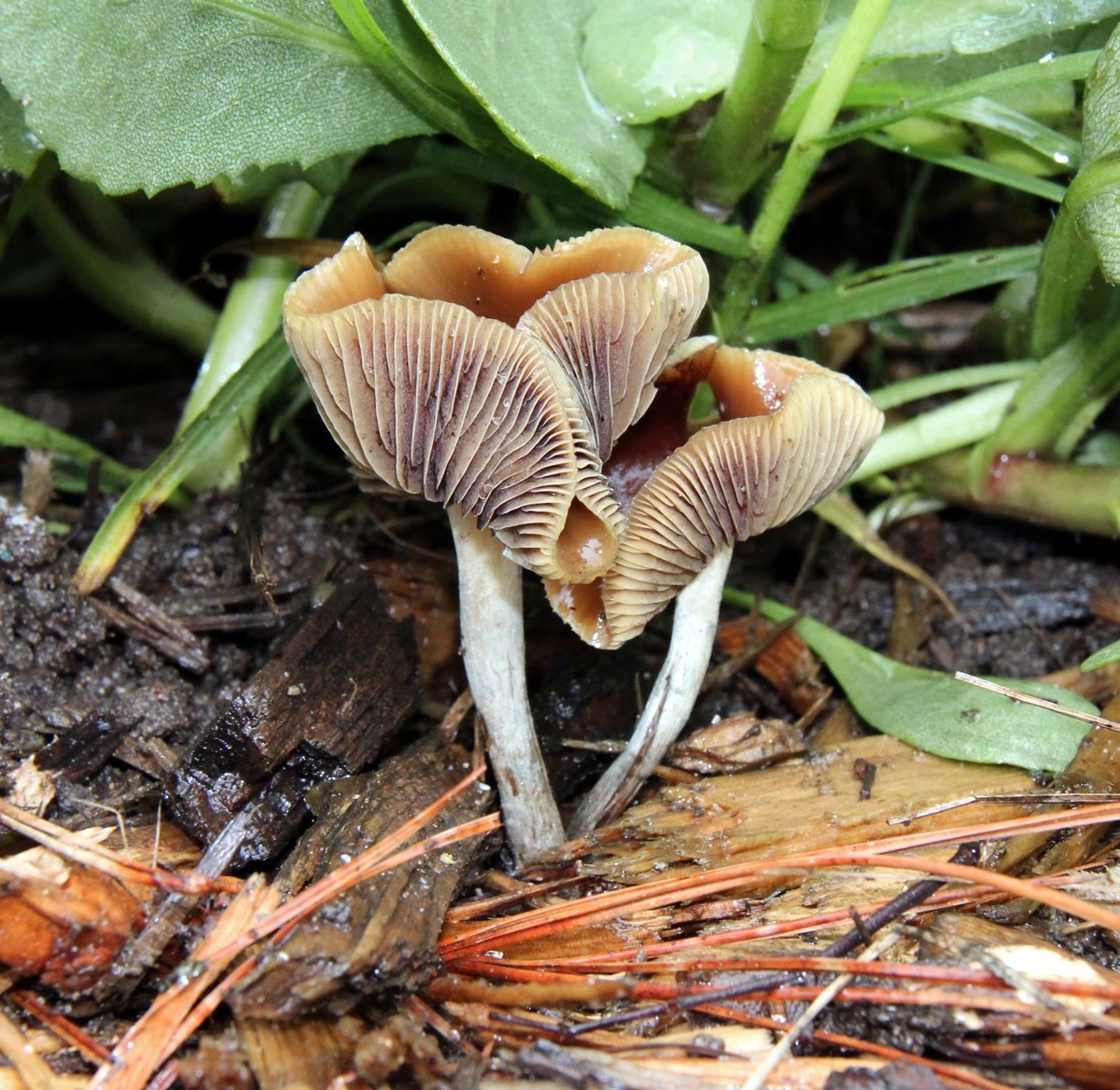
Psilocybe cyanescens
Wavy CapsWavy Caps — a potent, wood-loving psilocybe that has made a home in the woodchip and mulch of parks and gardens, spreading through the landscaped edges of cities across Europe and North America.
Psilocybe hispanica
A small, dung-loving psilocybin mushroom of the high Pyrenees — and the species proposed as the one painted, six thousand years ago, on a Spanish rock wall.
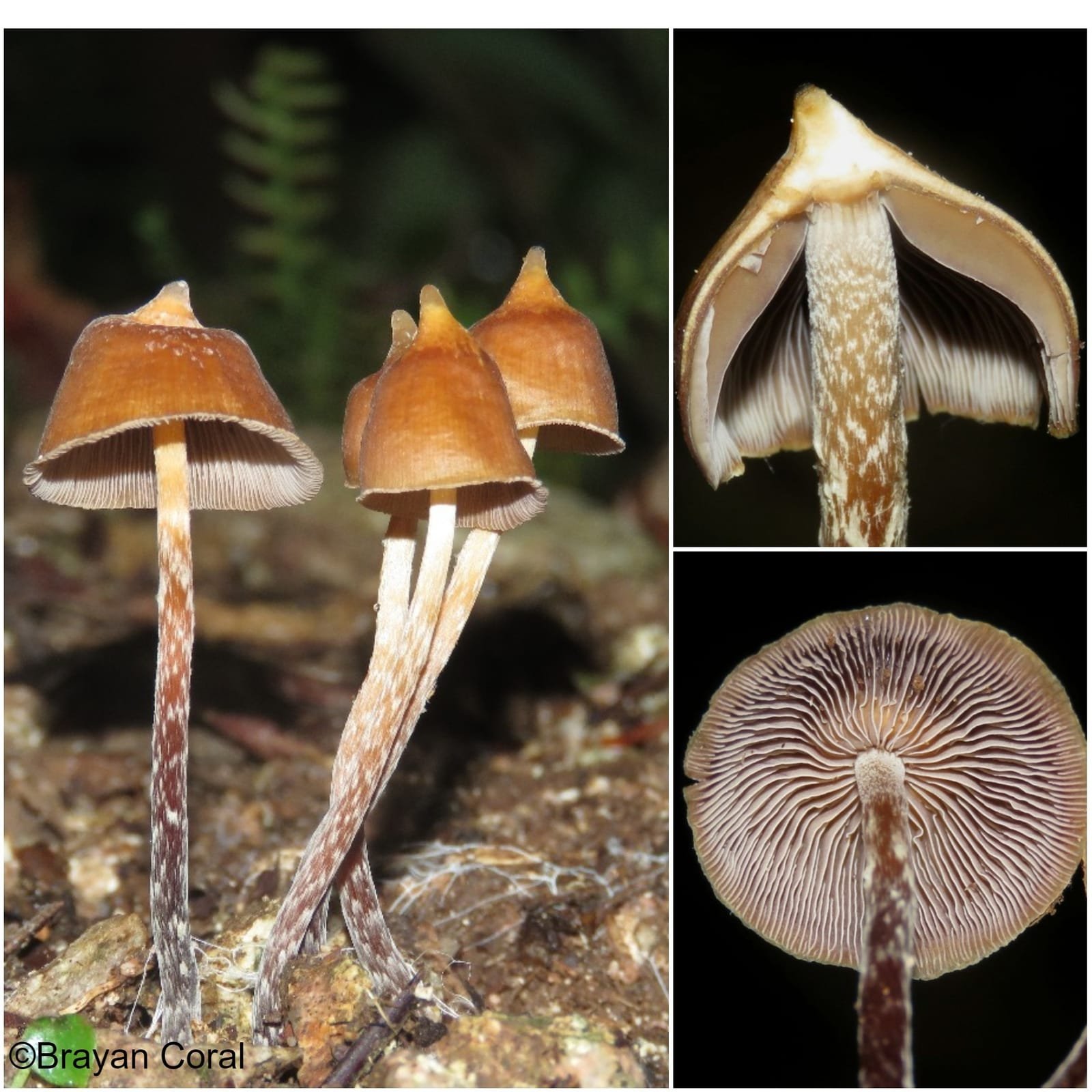
Psilocybe hoogshagenii
Little bird of the divine · pajarito (locally, with other species)A small Oaxacan mushroom recorded in ethnography as a diagnostic tool among Chinantec — and neighbouring — healers.
Psilocybe maluti
koae-ea-lekhoaba (Sesotho)A native southern African psilocybin mushroom, formally described in 2024, reported in Basotho traditional use as koae-ea-lekhoaba — the strongest published African case to date.
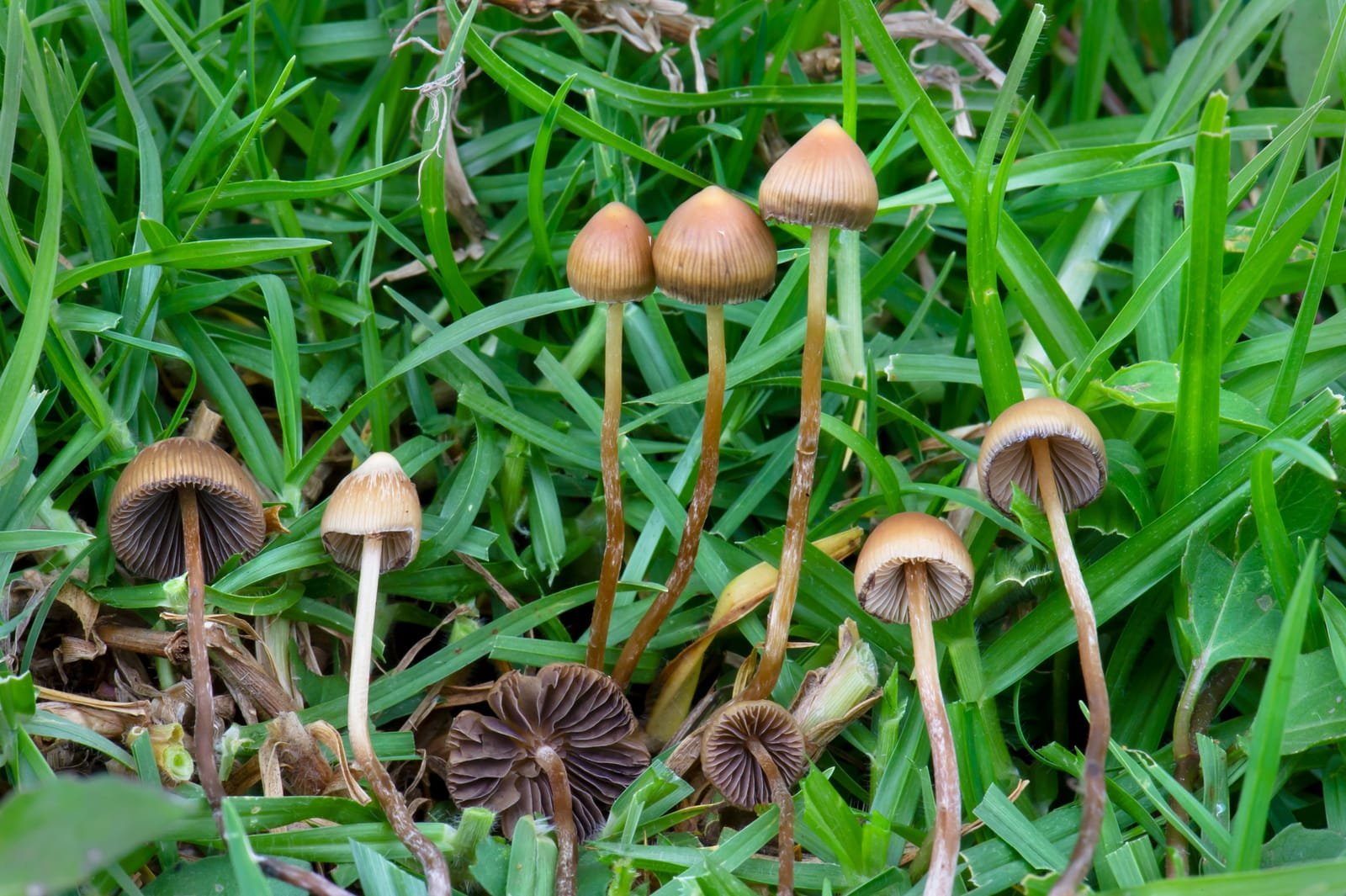
Psilocybe mexicana
Pajarito · teonanácatl (applied broadly)The small Oaxacan mushroom from which psilocybin was first isolated, and one of the species addressed as niños santos in Mazatec ceremony.
Psilocybe muliercula
las mujercitas ('the little women')The 'little women' of the Toluca highlands — a Mexican ritual mushroom that Roger Heim named for R. Gordon Wasson, and whose very name has never been fully settled.
Psilocybe natalensis
Natal (a cultivation name)A southern African psilocybe described from KwaZulu-Natal — one of the region's few named psilocybin species, and a marker of how recently, and how thinly, the continent's mushroom record is being written.
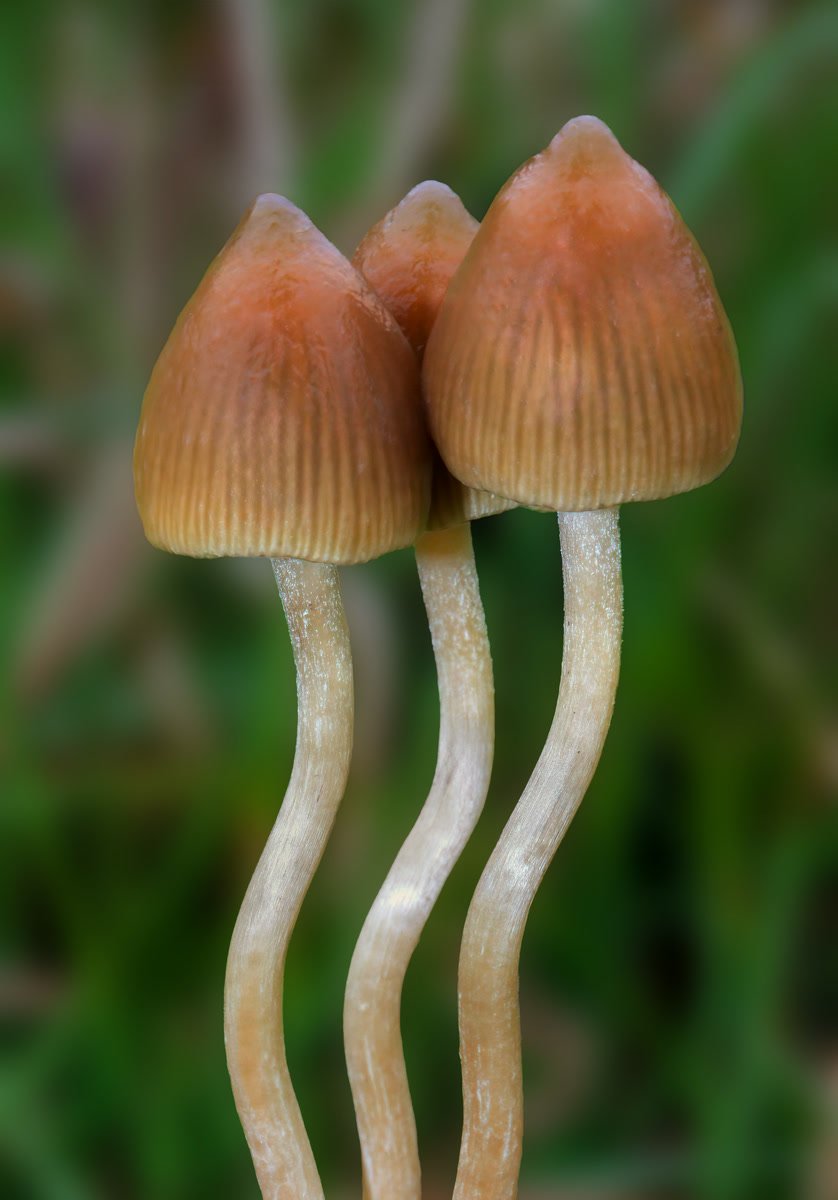
Psilocybe semilanceata
Liberty Cap · witch's hatThe Liberty Cap — the small, sharply pointed grassland mushroom that is the most common and potent wild psilocybe of Europe, and the centre of the modern European mushroom story rather than an ancient one.
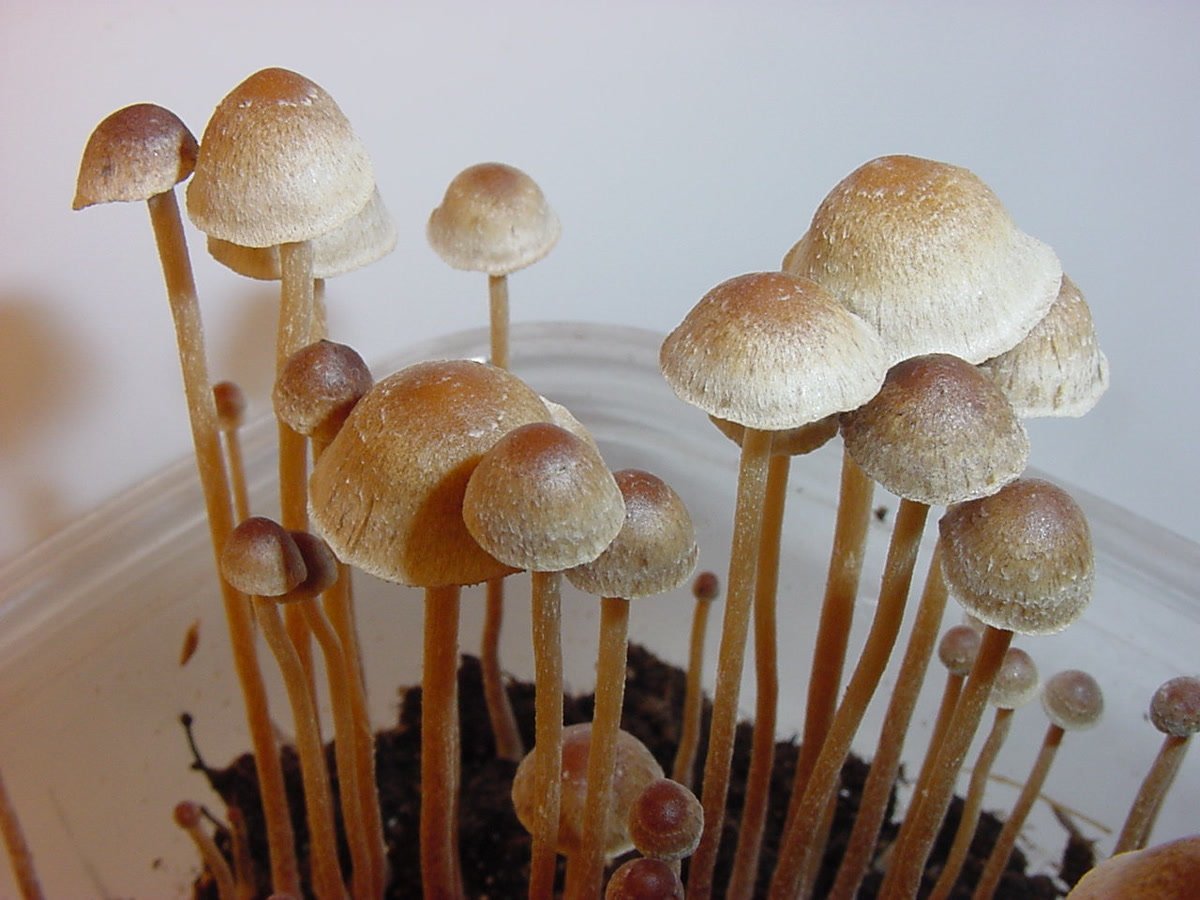
Psilocybe tampanensis
Philosopher's Stone · magic truffle (of the sclerotia)The 'Philosopher's Stone' — a rare Florida psilocybe famous less for its mushroom than for its sclerotia: the hardened underground masses, sold legally in the Netherlands as 'magic truffles', that exploit a gap between mushroom and fungus in the law.
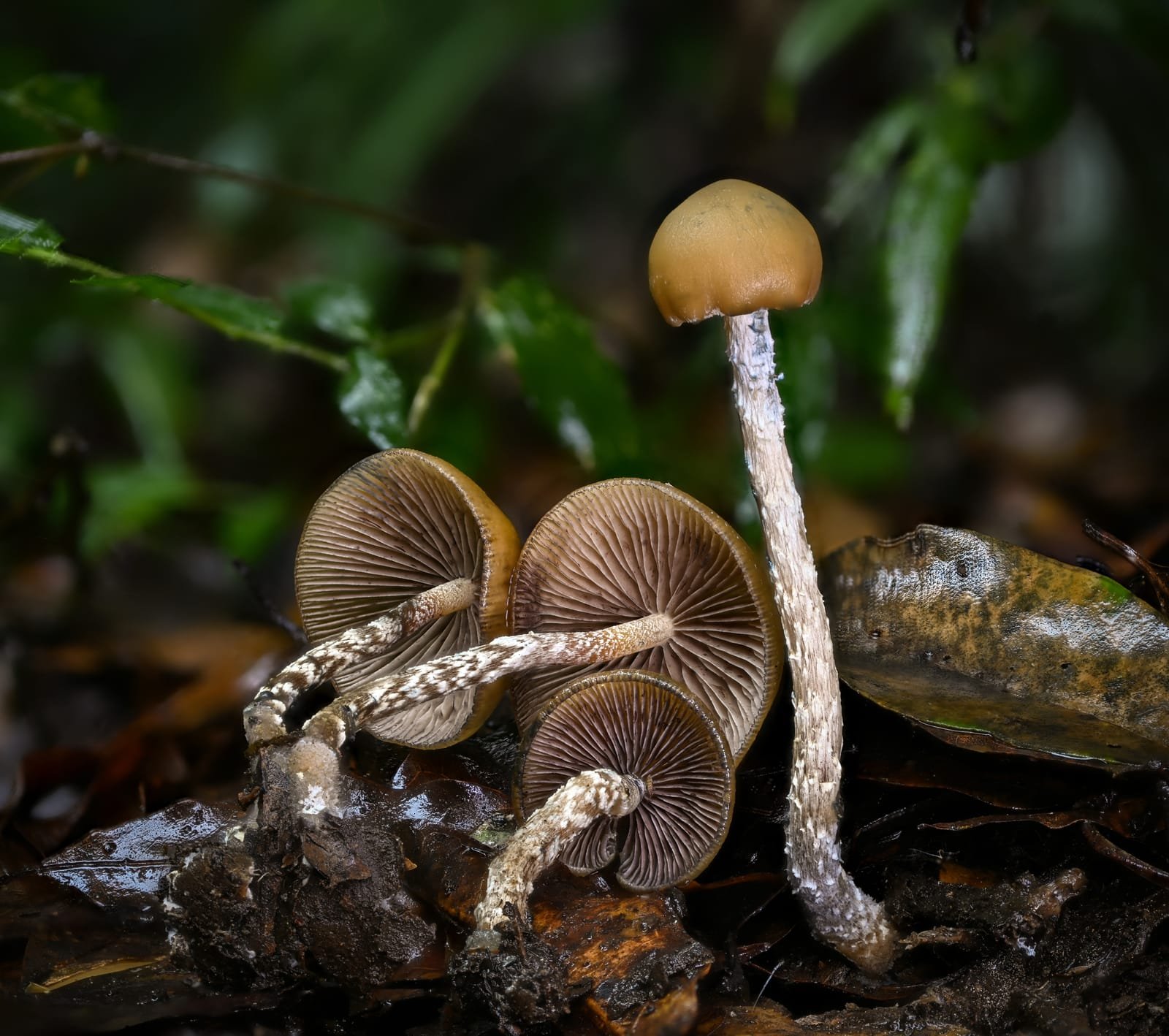
Psilocybe zapotecorum
Hongo Santo · Hongo BorrachoA robust Oaxacan species documented in 2025 as the 'holy mushroom' of a Zapotec community — Ni'to be'ya — used for healing and divination before the altar of San Miguel Arcángel.