Mesoamerica · Culture
Mixtec (Ñuu Savi)
Ñuu Savi — ‘People of the Rain’
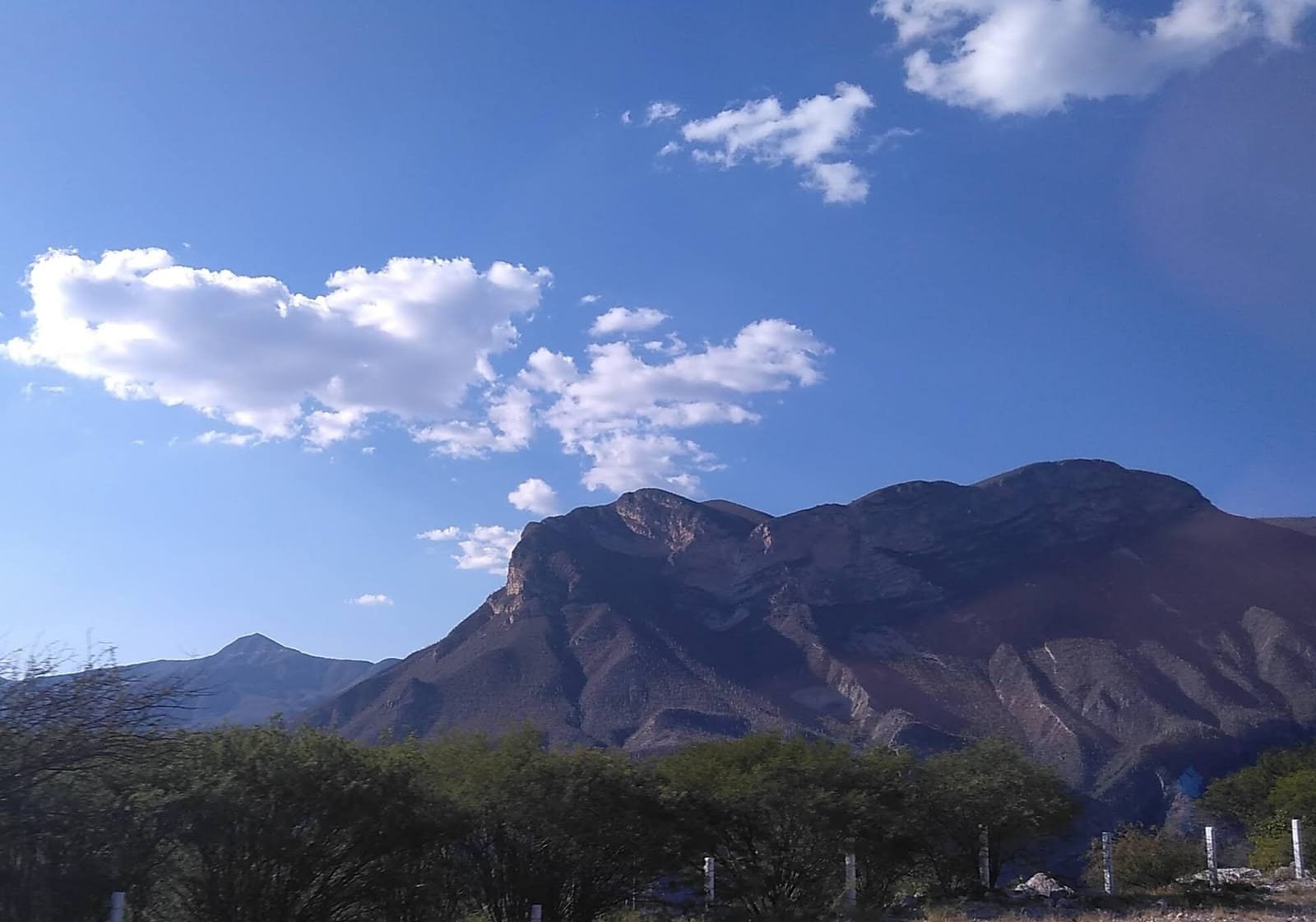
The Mixteca Alta of Oaxaca — the highland homeland of the Ñuu Savi, the People of the Rain. — Photo: Fani Lugo · CC BY-SA 4.0 · Source
The People of the Rain
The Ñuu Savi — “People of the Rain,” known to outsiders as the Mixtec — built one of Mesoamerica’s great civilisations across the mountains of what is now Oaxaca, Guerrero, and Puebla, and left behind a corpus of painted books unmatched for narrative richness. Their mushroom record survives in one of those books rather than in modern fieldwork.
A picture, not a ceremony
The Codex Yuta Tnoho (also called Vindobonensis Mexicanus I) contains a scene that several scholars read as a ritual of maize, pulque, and mushrooms, set in the mythic time before the first dawn of the present era.12 If that reading holds, it is among the strongest candidates for the oldest surviving pictorial record of ritual mushroom consumption in Mesoamerica.
What the codex does not tell us
The codex names no species. It records no dose, no specialist, no setting, and it preserves no ceremony that anyone has watched. What it holds is a painted narrative whose ritual meaning has to be reconstructed — real evidence, but evidence of an image rather than of an observed rite.
Why it still matters
The Ñuu Savi codex anchors the deep-time end of the Mesoamerican record: it shows that mushrooms belonged to the sacred imagination of the region’s painted books. A picture, however vivid, is still not a filmed rite — but it is a real trace, and an old one.
Footnotes
The record
Historical record
- before 1521
The codex is painted
The Codex Yuta Tnoho (Vindobonensis Mexicanus I), a Ñuu Savi pictorial manuscript, is created in the Postclassic.
Indigenous manuscript - 20th–21st c.
Readings of the mushroom scene
Interpreters including Peter Furst and, from a Ñuu Savi-centred perspective, Jansen and Pérez Jiménez read one scene as a cosmogonic ritual of maize, pulque, and mushrooms before the present era's first dawn.
Later scholarly interpretation
Evidence
The support for this entry, separated by kind. Different kinds of evidence carry different weight.
- Indigenous manuscript
- The Codex Yuta Tnoho (Vindobonensis Mexicanus I) — a pre-conquest Ñuu Savi manuscript.
- Iconography
- A painted scene interpreted as ritual mushroom consumption within a creation narrative.
- Later scholarly interpretation
- Scholarly readings of the scene; the codex itself does not label a species.
What remains uncertain
- The codex does not identify a mushroom species; that identification is not available from the manuscript.
Sources & editorial record
Sources & further reading
Anonymous Ñuu Savi (Mixtec) authors (pre-1521). Codex Yuta Tnoho (Vindobonensis Mexicanus I). Österreichische Nationalbibliothek, Vienna.
Mixtec pictorial manuscript; a scene interpreted as a ritual of maize, pulque, and mushrooms before the first dawn of the present era.
Maarten Jansen & Gabina Aurora Pérez Jiménez (2007). Encounter with the Plumed Serpent: Drama and Power in the Heart of Mesoamerica. University Press of Colorado.
Ñuu Savi–centred reading of the codices, including the mushroom scene of Codex Yuta Tnoho.
Peter T. Furst (1974). Hallucinogens in Precolumbian Art. in Art and Environment in Native America.
Early argument reading mushroom imagery in Mixtec and other Mesoamerican art as entheogenic.
Editorial record
Corrections history
No corrections recorded yet. Spotted an error or a mischaracterisation? See how corrections work.
Last reviewed