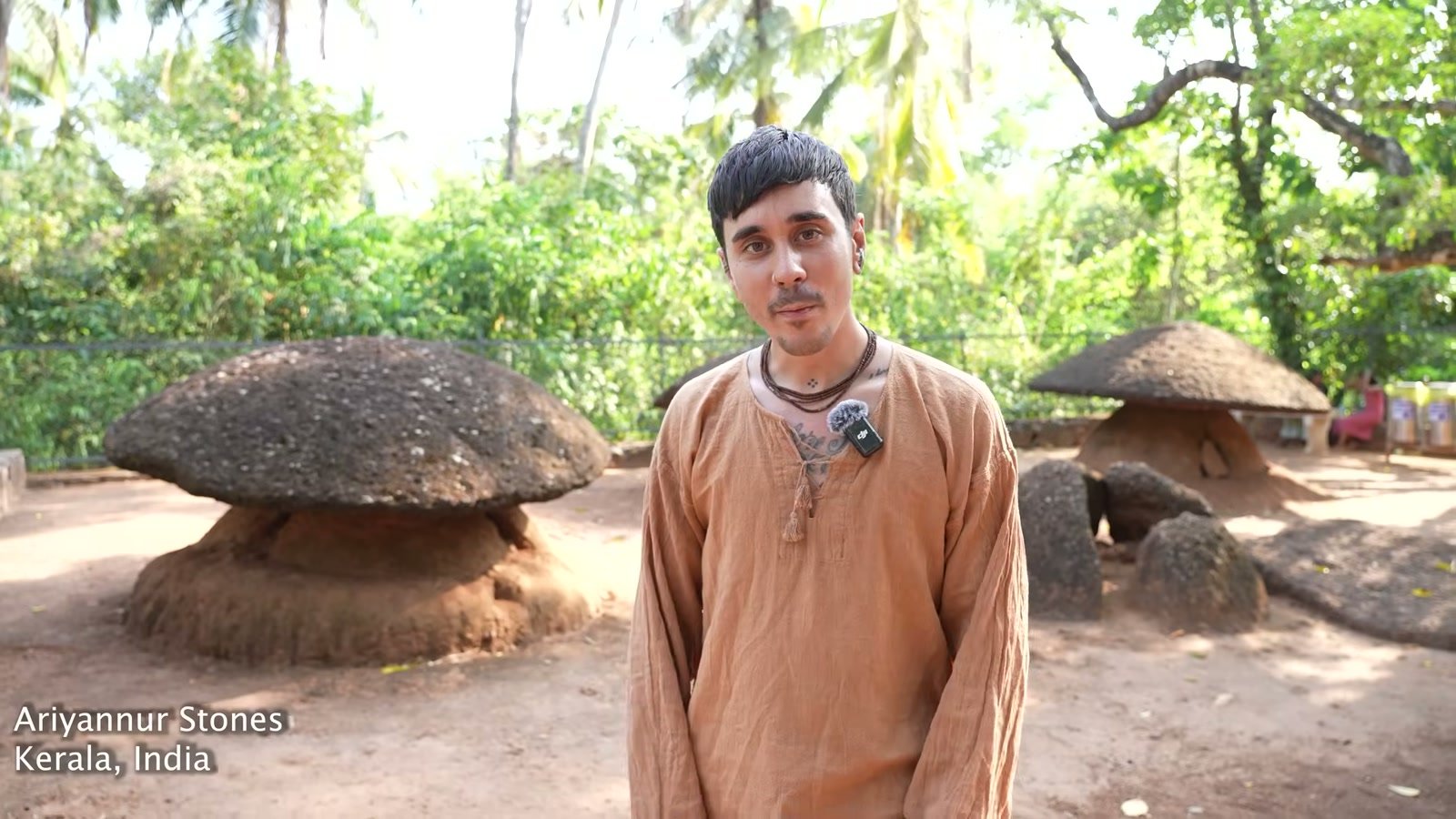
Researcher
Dakota Wint
Contemporary researcher · documentary filmmaker · 'dakota of earth'
A contemporary researcher and documentary filmmaker working as 'dakota of earth.' His first-person films chase psychedelic-origin theories of religion to the places themselves — India, Egypt, Oaxaca — testing each legend against what can actually be found on the ground.
The awakening
Dakota Wint came to this subject not through a university but through an experience. A mushroom, he says, redirected his life: he describes “seeing my breath pulsating as light” and a sudden conviction that “this entire universe is alive.” What followed was less a research programme than a pilgrimage — to Oaxaca to sit in Mazatec ceremony, to Maui to meet the teacher Ram Dass, and eventually to India, following a hunch that Hinduism might carry a psychedelic root.
A first-person method
Wint’s films share a method: take a psychedelic-origin theory of religion, and go to the place to test it against what can actually be found. In Searching for Soma he crosses India after R. Gordon Wasson’s argument that the Vedic Soma was a mushroom — reading temple carvings, visiting the megalithic “umbrella stones” of Kerala, the tantric sites of Odisha, and the temple complex of Khajuraho, turning over the recurring Sanskrit pun in which chhatra means both “umbrella” and “mushroom.”
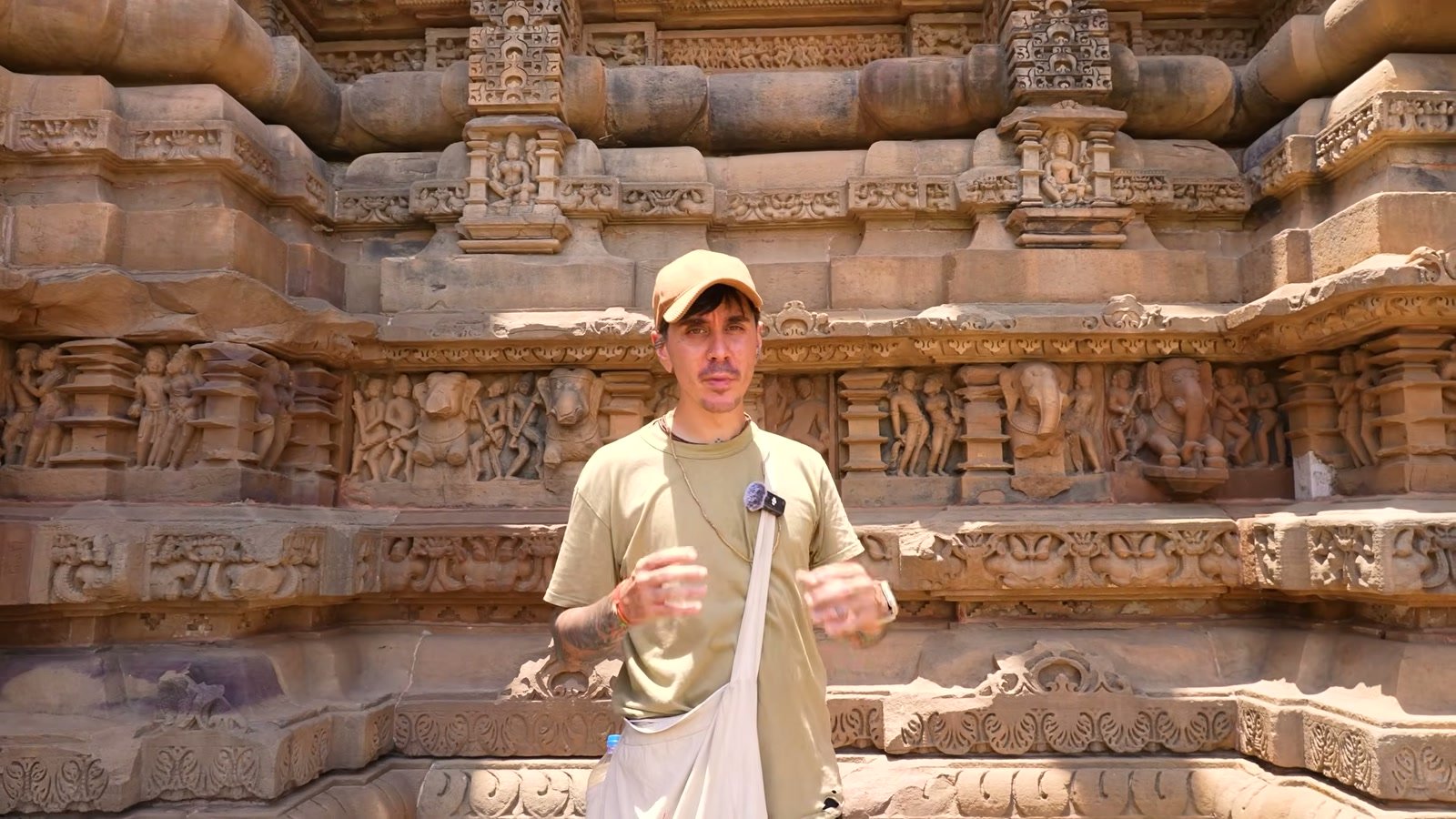
An honest ending
What sets the work apart is where it lands. After all the carvings and coincidences, Searching for Soma refuses the easy answer: “I don’t think there’s enough evidence to say that Soma was definitely a mushroom… This is a mystery, and the mystery continues.” Chasing the strangeness as far as it goes, and still reporting honestly that the case is unproven — the instinct of a researcher rather than a salesman.
dakota of earth
Under the name dakota of earth, Wint has carried the same method elsewhere: to the temple of Hathor at Dendera in Egypt, asking whether its carvings encode a visionary practice, and back to the Sierra Mazateca for ceremony with a Mazatec curandera. Across all of it runs one throughline — a willingness to follow the mushroom’s strangest claims to their source and report back what he actually finds.
The films
Did Ancient Hindus Use Mushrooms? (Searching for Soma)
Egypt & the Hathor Temple at Dendera
A Mazatec mushroom ceremony
The record
Sources & editorial record
Sources & further reading
dakota of earth (@dakotawint) (2025). Did Ancient Hindu's Use Mushroom? (Searching for Soma). YouTube.
A video documentary by the channel “dakota of earth” revisiting Wasson’s Amanita-as-Soma thesis and the wider hunt for the botanical identity of Soma; an accessible entry point, not a scholarly source.
Editorial record
Corrections history
No corrections recorded yet. Spotted an error or a mischaracterisation? See how corrections work.
Last reviewed