Evidence & debate
Was the Vedic Soma the fly agaric, Amanita muscaria?
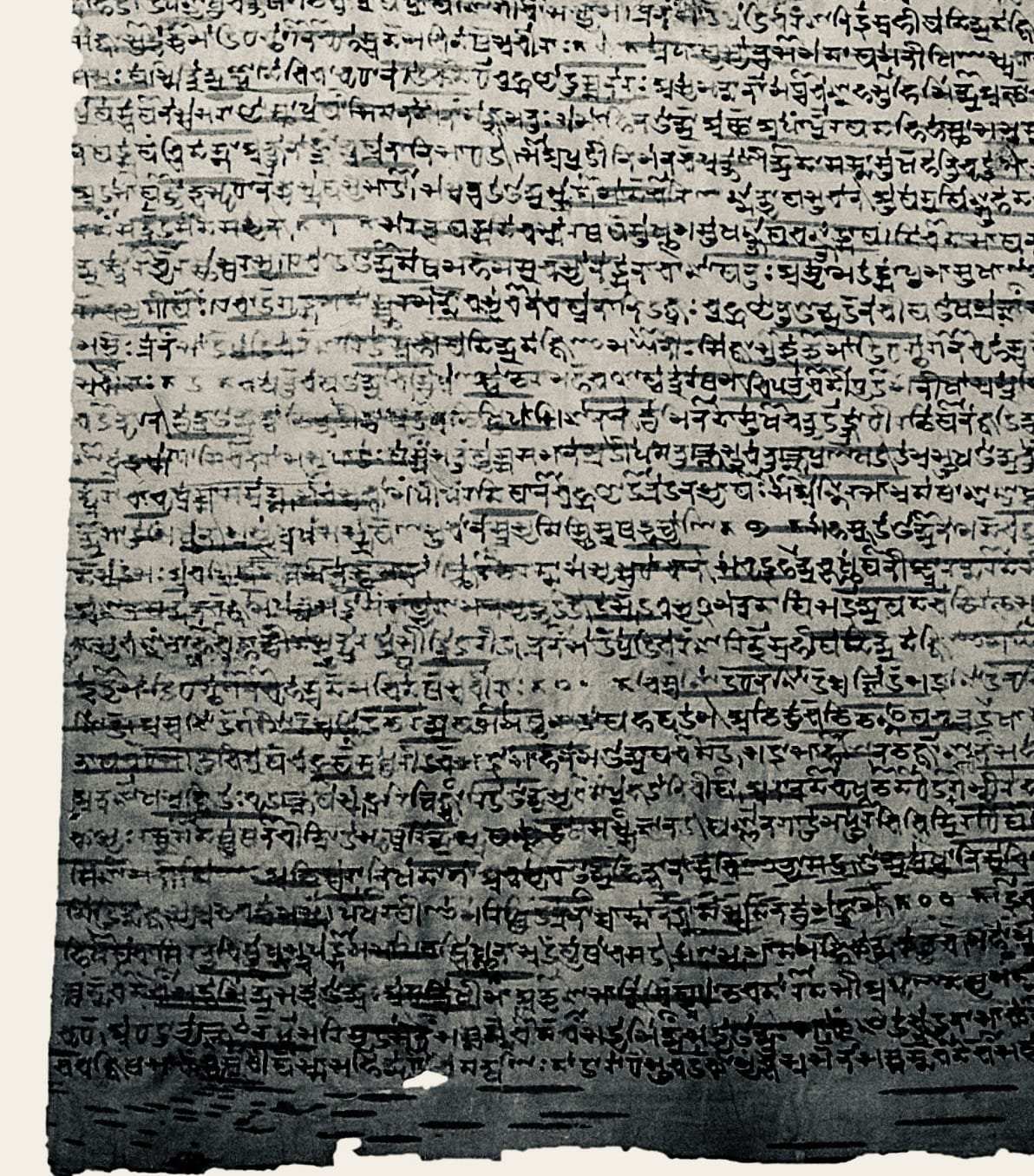
R. Gordon Wasson's 1968 argument that Soma was the fly agaric is a landmark of speculative ethnomycology — influential, elegant, and still contested by scholars who read the same hymns very differently.
“The sacred Soma of the Rigveda was the mushroom Amanita muscaria.”
Strongest case for
The Rigveda describes Soma as a plant pressed for its juice, without ordinary leaves or roots, linked to radiant intoxication; Wasson matched this to Eurasian fly-agaric lore and Siberian use, arguing no mundane plant fits as well.
Strongest case against
The hymns fit several candidates (Ephedra, Peganum harmala, and others); no Vedic text names a mushroom; the Amanita reading rests on selective imagery; and independent evidence for early Indo-Iranian Amanita ritual is lacking.
The claim
Few ideas from psychedelic history are repeated as confidently as this one: that Soma, the deified plant-drink of the Rigveda, was the fly agaric. The confidence is unearned. The real situation is a genuine, still-open scholarly puzzle.
The case for
In Soma: Divine Mushroom of Immortality (1968), R. Gordon Wasson assembled a striking argument.1 The Rigveda praises a plant that is pressed for a luminous juice, that seems to have no leaves, blossom, root, or seed, and that brings a radiant intoxication. Wasson matched these features to Amanita muscaria and to documented Siberian fly-agaric use — including, controversially, references he read as pointing to the recycling of urine, a known feature of the Siberian tradition.2 No ordinary plant, he argued, fits the hymns so cleanly.
The case against
Critics answer that the hymns are poetry, not botany, and that several candidates fit their imagery — Ephedra, Syrian rue (Peganum harmala), and others have all been proposed. No Vedic text actually names a mushroom. The Amanita reading, they argue, leans on a selective harvest of images, and there is no independent archaeological or ethnographic evidence of early Indo-Iranian fly-agaric ritual to corroborate it.3 A beautiful literary case, in short, is not the same as proof.
An unsolved puzzle
Soma is a case study in how a hypothesis becomes a “fact” through sheer repetition. Wasson’s idea is serious and worth knowing — and still unproven. The honest position is not to pick a mushroom and move on but to leave the question open, which is what the field, half a century on, still does.
Watch: Searching for Soma
For an accessible walk-through of the question, the video documentary Did Ancient Hindu’s Use Mushroom? (Searching for Soma) by dakota of earth lays out the Amanita thesis and its rivals for a general audience — a popular introduction, not a scholarly authority.
Footnotes
The record
What remains uncertain
- The identity of Soma is one of the oldest unsolved problems in the study of religion; multiple candidates remain in play.
- A compelling literary argument is not the same as material or ethnographic proof.
Sources & editorial record
Sources & further reading
R. Gordon Wasson (1968). Soma: Divine Mushroom of Immortality. Harcourt Brace Jovanovich.
The influential (and contested) argument identifying the Rigvedic Soma with Amanita muscaria.
Andy Letcher (2006). Shroom: A Cultural History of the Magic Mushroom. Faber & Faber.
A critical cultural history that deflates several popular entheogenic myths — useful precisely where it disagrees with the psychedelic canon.
Waldemar Jochelson (1905–1908). The Koryak. Jesup North Pacific Expedition, Vol. VI, AMNH.
Foundational ethnography documenting Koryak use of Amanita muscaria (wapaq).
dakota of earth (@dakotawint) (2025). Did Ancient Hindu's Use Mushroom? (Searching for Soma). YouTube.
A video documentary by the channel “dakota of earth” revisiting Wasson’s Amanita-as-Soma thesis and the wider hunt for the botanical identity of Soma; an accessible entry point, not a scholarly source.
Editorial record
Corrections history
No corrections recorded yet. Spotted an error or a mischaracterisation? See how corrections work.
Last reviewed