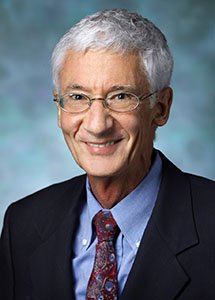
Researcher
Roland Griffiths
Psychopharmacologist, Johns Hopkins University · 1946–2023
The rigorous scientist who reopened clinical psilocybin research. His 2006 Johns Hopkins study — careful, controlled, and cautious — did more than any manifesto to make the sacred mushroom a serious subject of modern medicine.
The study that restarted a science
For three decades after the 1960s backlash, rigorous human research on psilocybin was effectively frozen. It was Roland Griffiths, a respected psychopharmacologist at Johns Hopkins with a career built on caffeine and drug-dependence studies, who reopened it. His 2006 paper reported that, under careful conditions, psilocybin could reliably occasion “mystical-type experiences” that participants rated, months later, among the most meaningful of their lives.1
Rigour first
What made Griffiths persuasive was precisely that he was not an evangelist. He came to the work as a sceptic and insisted on the machinery of serious science — controls, blinding, dose-response, long-term follow-up, safety monitoring. That credibility helped seed a wave of clinical trials on psilocybin for depression, anxiety, and end-of-life distress, and the field’s slow, still-incomplete path toward the clinic.2
Why he belongs here
Griffiths belongs as the figure who completed a long arc: from the Mazatec velada, to Hofmann’s molecule, to a controlled trial with a data-safety board. Diagnosed with terminal cancer, he spoke publicly and calmly about facing death — informed, he said, by his own research into what these experiences can offer. He died in 2023, having turned a ceremonial sacrament into a measurable, defensible clinical question.2
Footnotes
-
Griffiths et al., “Psilocybin can occasion mystical-type experiences…,” Psychopharmacology (2006). ↩
-
Pollan, How to Change Your Mind (2018); on the trials that followed, see the ongoing Phase 3 programme. ↩ ↩2
The record
Sources & editorial record
Sources & further reading
Roland R. Griffiths & and colleagues (2006). Psilocybin can occasion mystical-type experiences having substantial and sustained personal meaning. Psychopharmacology.
The Johns Hopkins study widely credited with reopening rigorous clinical psilocybin research in the 2000s.
Michael Pollan (2018). How to Change Your Mind. Penguin Press.
The bestseller that re-popularised psychedelic science for a mainstream audience and helped frame the "renaissance" narrative.
COMPASS Pathways (2025–2026). COMP360 psilocybin Phase 3 programme (COMP005, COMP006) topline results. COMPASS Pathways / Psychiatric Times.
Two Phase 3 trials for treatment-resistant depression reported positive primary endpoints (June 2025, Feb 2026); an NDA submission was targeted for late 2026. Promising, but not yet an approval.
Editorial record
Corrections history
No corrections recorded yet. Spotted an error or a mischaracterisation? See how corrections work.
Last reviewed