Essay ·
How the Mushroom Becomes Myth
Across every culture that has met it, the sacred mushroom does the same astonishing thing — it makes myth. A look at the recurring stories the fungus keeps generating, and why they refuse to die.
By MushroomTribes editorial
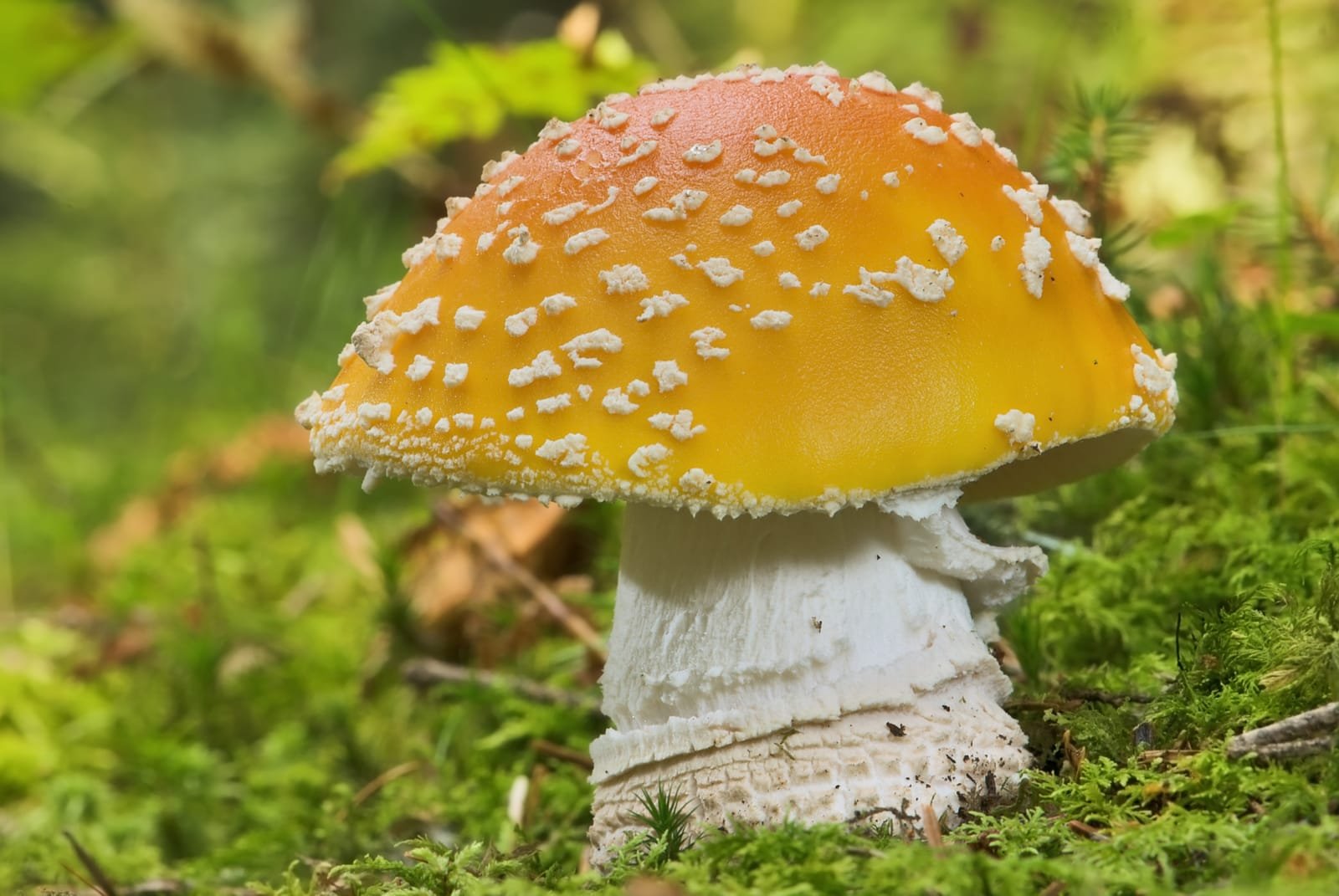
A myth-making machine
Read enough of the mushroom’s history and you notice something uncanny: wherever human beings have met these fungi, the same kinds of story bloom. A plant that is also a god. Little people who arrive when the mushroom is eaten. A food of the gods that lets the drinker see across worlds. Different continents, no shared contact — and yet the myths rhyme. The mushroom is not merely a subject of mythology. It seems to be an engine of it.
The stories it keeps telling
The pressed god. In the Rigveda, Soma is at once a plant, a drink, and a deity — pressed for a radiant juice and drunk by priests and gods.1 Three thousand years later we are still chasing what it was, and the chase itself has become part of the legend.
The little people. In Yunnan, the Papua New Guinea Highlands, and the northern Philippines — places with no common folklore — those who eat certain mushrooms describe the same vision: crowds of tiny humans, marching and dancing. The story arrives, fully formed, in three languages at once.
The stones and the gods. Across highland Guatemala, hundreds of small mushroom-shaped stones survive. Whether they are gods, moulds, or something else is still argued — and the argument only deepens the spell.2
Why the myths endure
These stories last because the mushroom gives people something worth telling a story about. The experience is vivid, strange, and hard to hold in ordinary words, so it reaches for the mythic — the language of gods, ancestors, and little people, because no smaller language fits. And once told, a good mushroom story is almost impossible to kill: it is too beautiful, too useful, too resonant to let go.3 That durability is not a flaw in the record. It is the record — the living mythology of the mushroom, still being written.
What this archive does
MushroomTribes gathers those myths and tells them — the documented, the disputed, and the gloriously unresolved — with their sources close at hand so the wonder stays grounded. The point is never to explain the magic away, but to follow it: to chase the strangeness across every culture that has met the mushroom, and to keep the stories alive.
Footnotes
The record
Sources & further reading
Andy Letcher (2006). Shroom: A Cultural History of the Magic Mushroom. Faber & Faber.
A critical cultural history that deflates several popular entheogenic myths — useful precisely where it disagrees with the psychedelic canon.
Ulrich Köhler (1976). Mushrooms, Drugs, and Potters: A New Approach to the Function of Precolumbian Mesoamerican Mushroom Stones. American Antiquity 41(2).
The central counterargument: reinterprets mushroom stones as potters’ anvils/moulds rather than ritual paraphernalia.
R. Gordon Wasson (1968). Soma: Divine Mushroom of Immortality. Harcourt Brace Jovanovich.
The influential (and contested) argument identifying the Rigvedic Soma with Amanita muscaria.
Editorial record
Corrections history
No corrections recorded yet. Spotted an error or a mischaracterisation? See how corrections work.
Last reviewed