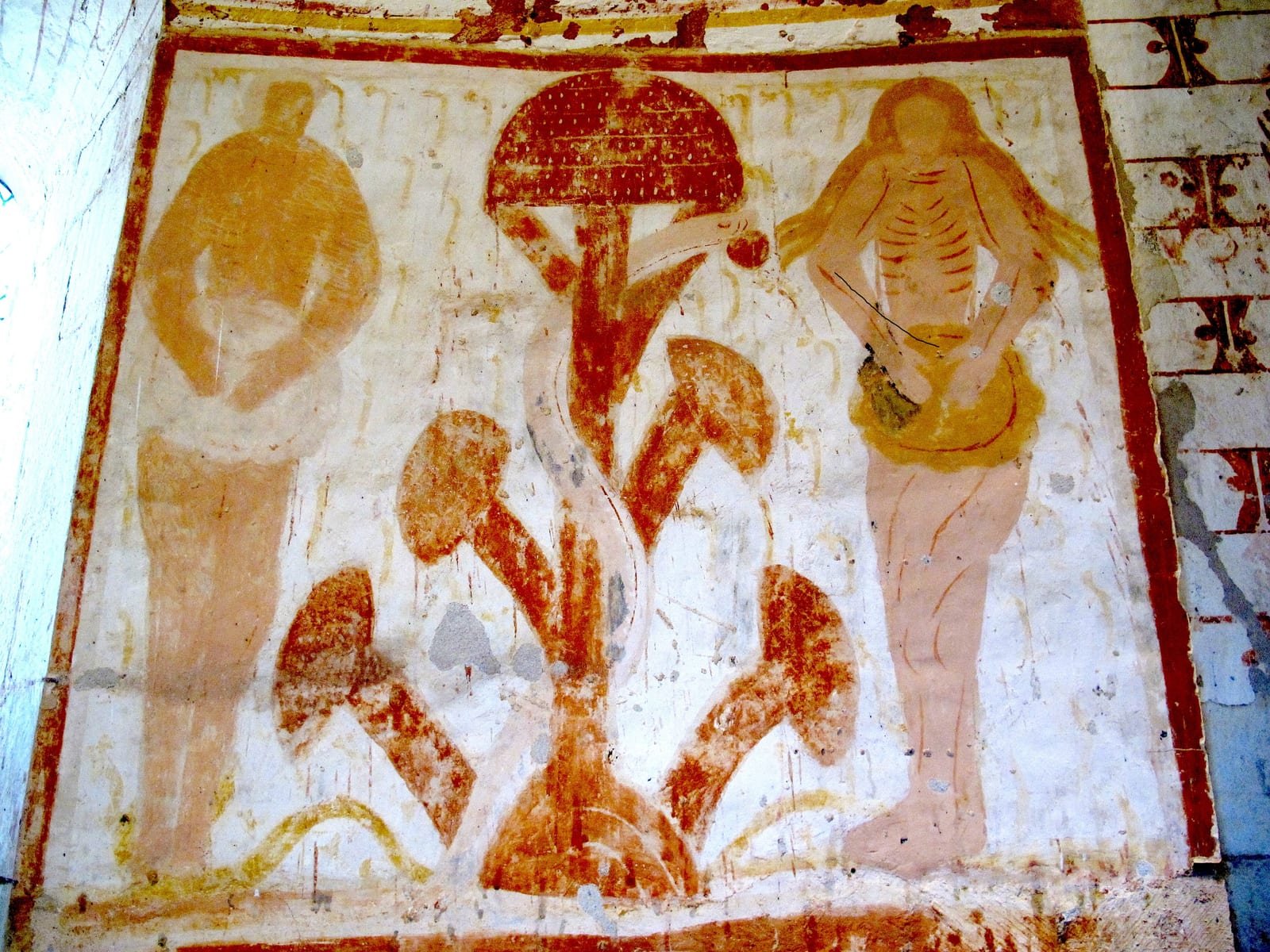
Evidence & debate
Did Christianity begin as a mushroom cult?
In 1970 the philologist John Allegro argued that Christianity grew out of a secret Amanita muscaria fertility cult, its rituals hidden in Gospel wordplay. The book ended his academic career and is rejected by mainstream scholarship.
“The Gospels are a coded record of an Amanita muscaria cult; 'Jesus' was a mushroom.”
Strongest case for
Allegro was a genuine scholar — a member of the original Dead Sea Scrolls editorial team — who marshalled Sumerian and Semitic etymologies to argue that fertility and mushroom cults underlay Near Eastern religion, Christianity included.
Strongest case against
The etymological chains he relied on are regarded by specialists as unsound; there is no textual or archaeological evidence for an early Christian Amanita cult; and scholars across fields rejected the argument on publication. It survives as a curiosity, not a contender.
The claim
Of all the theories tying religion to mushrooms, John Allegro’s is the most audacious. In The Sacred Mushroom and the Cross (1970) he argued that Christianity did not begin with a historical Jesus at all, but as a secret cult of the fly agaric, Amanita muscaria — the whole Gospel narrative, he claimed, a code written to hide a fertility-and-mushroom religion from Roman persecution.
The case for
Allegro was not a crank from nowhere. He was a trained philologist and one of the original scholars entrusted with the Dead Sea Scrolls. His method was etymological: he traced Greek and Hebrew names back through Sumerian roots to argue that mushroom and fertility symbolism ran beneath the surface of Near Eastern religion.
The case against
Almost no specialist accepted a word of it. The Sumerian etymologies were judged fanciful; there is no manuscript, artefact, or independent testimony pointing to an early Christian mushroom cult; and reviewers across theology, philology, and history rejected the book on arrival. It cost Allegro his academic standing and left his reputation in ruins.
Where it stands
The theory is kept here as the high-water mark of mushroom-origin thinking — a case study in how far an argument can run on etymology alone, and how badly it can end. As history, it is discredited.
The record
What remains uncertain
- This is recorded as a landmark of the genre, not as a live possibility; the scholarly consensus is firmly against it.
Sources & editorial record
Sources & further reading
John M. Allegro (1970). The Sacred Mushroom and the Cross. Hodder & Stoughton.
Argued that Christianity began as an Amanita muscaria fertility cult encoded in the Gospels; rejected by mainstream philology and largely discredited.
Andy Letcher (2006). Shroom: A Cultural History of the Magic Mushroom. Faber & Faber.
A critical cultural history that deflates several popular entheogenic myths — useful precisely where it disagrees with the psychedelic canon.
Editorial record
Corrections history
No corrections recorded yet. Spotted an error or a mischaracterisation? See how corrections work.
Last reviewed