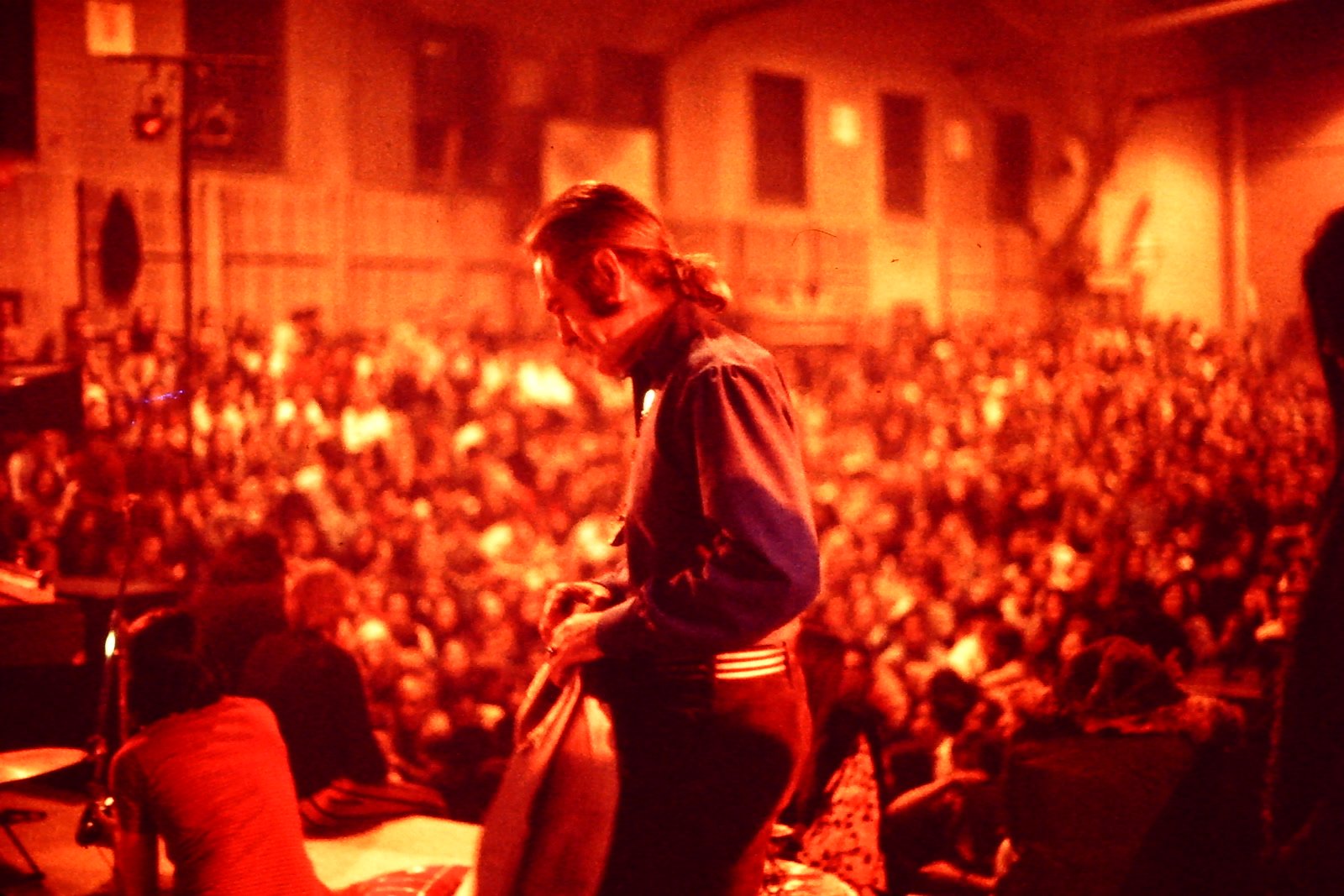
Historical figure
Timothy Leary
Psychologist & psychedelic counterculture figure · 1920–1996
The Harvard psychologist who turned psilocybin into a movement — and, many argue, into a scandal that set serious research back a generation. He belongs here as the figure through whom the mushroom became political, for better and for worse.
The Harvard Psilocybin Project
After his own first mushroom experience in Mexico in 1960, the Harvard psychologist Timothy Leary — with Richard Alpert (later Ram Dass) — launched the Harvard Psilocybin Project, running psilocybin sessions with graduate students, prisoners, and, in Walter Pahnke’s 1962 “Good Friday” experiment, divinity students in a chapel.1 For a brief moment, psychedelics were a legitimate, if loosely controlled, subject of university research.
Turn on, tune in, drop out
Leary could not keep the work in the laboratory, and may never have wanted to. Dismissed from Harvard in 1963, he became psychedelia’s most famous evangelist, coining “turn on, tune in, drop out” and co-writing The Psychedelic Experience (1964).2 His fame helped trigger the backlash: prohibition, moral panic, and a near-total freeze on human research that lasted decades. The scientists who reopened the field in the 2000s worked hard to distance themselves from him.
Why he belongs here
Leary is included not as a scientific authority but as a turning point. More than anyone, he pulled the mushroom out of the ceremony and the clinic and into politics and pop culture — creating the modern psychedelic movement and, in the same gesture, the reaction that buried it. That double legacy is exactly the kind of thing this archive tries to hold in view without flattening.3
Footnotes
The record
Sources & editorial record
Sources & further reading
Timothy Leary et al. (1964). The Psychedelic Experience. University Books.
A product of the Harvard Psilocybin Project (1960–62); a founding text of 1960s psychedelic counterculture and the backlash that followed.
Walter N. Pahnke (1963). Drugs and Mysticism (the "Good Friday" / Marsh Chapel Experiment). Harvard University (doctoral dissertation).
The 1962 double-blind study of psilocybin and religious experience — an early attempt at rigour, later criticised for follow-up and safety reporting.
Andy Letcher (2006). Shroom: A Cultural History of the Magic Mushroom. Faber & Faber.
A critical cultural history that deflates several popular entheogenic myths — useful precisely where it disagrees with the psychedelic canon.
Michael Pollan (2018). How to Change Your Mind. Penguin Press.
The bestseller that re-popularised psychedelic science for a mainstream audience and helped frame the "renaissance" narrative.
Editorial record
Corrections history
No corrections recorded yet. Spotted an error or a mischaracterisation? See how corrections work.
Last reviewed