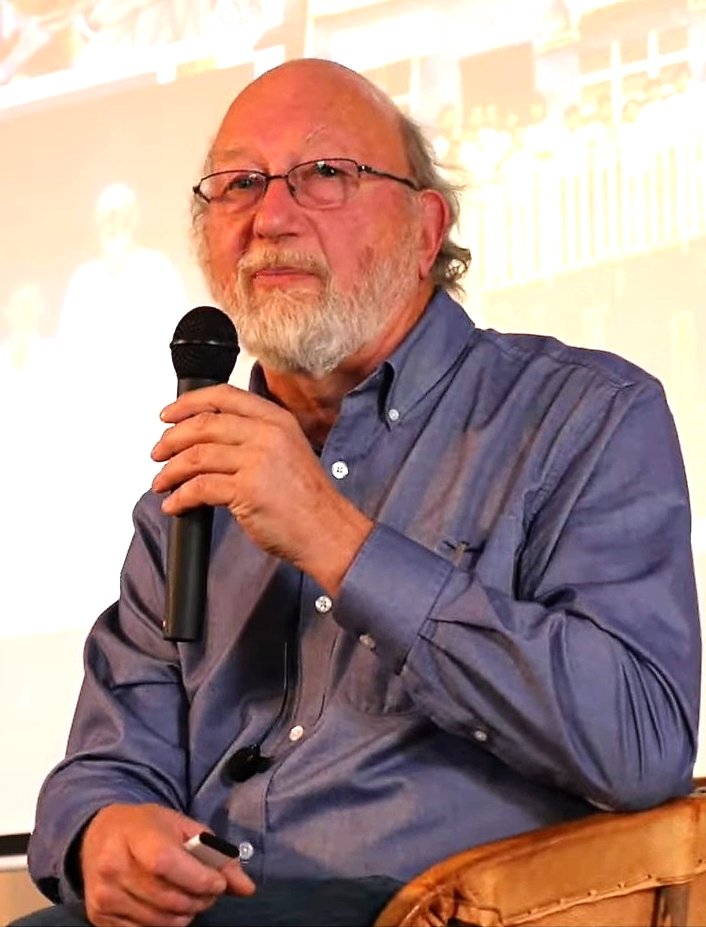
Researcher
Dennis McKenna
Ethnopharmacologist · b. 1950
Terence McKenna's younger brother — and the scientist of the pair. Present at the myth's origin in the Amazon in 1971, he went on to a serious career in ethnopharmacology, standing as a working example of how to chase wonder without abandoning evidence.
The experiment at La Chorrera
In 1971 Dennis McKenna travelled with his brother Terence deep into the Colombian Amazon, to La Chorrera, in search of visionary plants. What happened there — a fevered episode the brothers called “the experiment” — became the seed of Terence’s entire mythology of time, language, and mushrooms.1 Dennis lived the same origin story, but drew a very different lesson from it.
The scientist of the family
Where Terence became a bard, Dennis became a researcher. He took degrees in botany and ethnopharmacology and spent a career studying the pharmacology of ayahuasca, psilocybin, and other plant medicines — including work on the Banisteriopsis alkaloids behind ayahuasca. He is a co-founder of research and educational institutions in the field, and has been a consistent voice for rigour over hype.2
Why he belongs here
Dennis McKenna belongs precisely because he stood so close to the myth and still chose the harder path of evidence. His memoir is gently sceptical about his brother’s grander claims, even as it honours the shared wonder that started it all.2 He is a living model of this archive’s own stance: take the strangeness seriously, follow it honestly, and refuse to pretend a beautiful story is the same as a proven one.
Footnotes
The record
Sources & editorial record
Sources & further reading
Dennis McKenna (2012). The Brotherhood of the Screaming Abyss: My Life with Terence McKenna. Polaris Publications.
Dennis McKenna’s memoir of the brothers’ 1971 "Experiment at La Chorrera" in the Colombian Amazon and his subsequent career in ethnopharmacology — a first-hand, more sceptical counterpoint to Terence’s mythmaking.
Terence McKenna (1992). Food of the Gods: The Search for the Original Tree of Knowledge. Bantam Books.
Sets out the "Stoned Ape" hypothesis — that psilocybin drove human cognitive evolution. Influential in psychedelic culture; not accepted by mainstream anthropology.
Editorial record
Corrections history
No corrections recorded yet. Spotted an error or a mischaracterisation? See how corrections work.
Last reviewed