Psilocybin · Species
Panaeolus cyanescens
(Berk. & Broome) Sacc., 1887 · Blue Meanies, Copelandia cyanescens (former name)
'Blue Meanies' — a small, intensely potent, pantropical dung mushroom in a different genus from Psilocybe, once placed in Copelandia, and among the strongest psilocybin species anywhere.
A potent mushroom from another genus
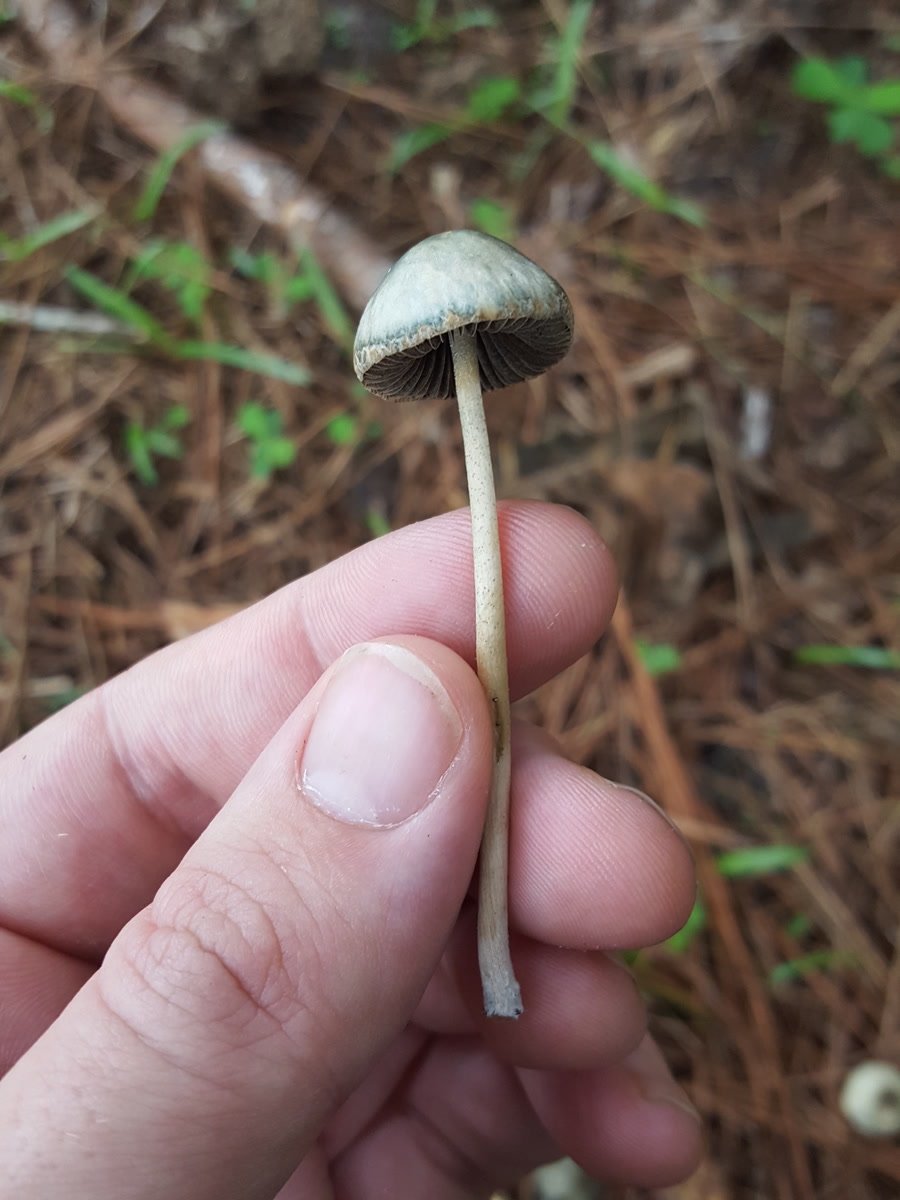
Not every psilocybin mushroom is a Psilocybe. Panaeolus cyanescens — long known as Copelandia cyanescens — is a thin-fleshed, grey-to-tan grassland species with a black spore print (a Panaeolus trait) and strong blue bruising. It is small, delicate, and, by weight, one of the most potent psilocybin mushrooms known.
Dung, heat, and the tropics
Where the Liberty Cap wants cool European pasture, P. cyanescens wants warmth: it fruits on cattle and horse dung across the tropics and subtropics, and is a conspicuous part of the mushroom scene in places like Bali and southern Thailand, largely as a modern, tourism-driven phenomenon rather than a documented traditional rite.
A confusing common name
“Blue Meanies” is attached both to this species and to a strain of P. cubensis, so the name resolves nothing on its own — a small illustration of why common names are treated cautiously throughout this archive.
Active compounds, toxicity, and law
The actives are psilocybin and psilocin, often at high concentration. The genus also contains toxic and merely unpleasant species, and small dung mushrooms are easy to confuse; the legal and safety cautions of every psilocybin fungus apply. This page documents, and does not instruct.
Conservation
Widespread and abundant across the warm world; of no conservation concern.
The record
What remains uncertain
- 'Blue Meanies' also circulates as the name of a Psilocybe cubensis strain, so the common name alone is ambiguous.
Sources & editorial record
Sources & further reading
Jonathan Ott (1993). Pharmacotheon: Entheogenic Drugs, Their Plant Sources and History. Natural Products Co..
Encyclopaedic survey of entheogens; compiles obscure and historical mushroom cases, including the 17th-century Yurimagua mushroom inebriant reported from the Amazon.
Gastón Guzmán (2008). Hallucinogenic Mushrooms in Mexico: An Overview. Economic Botany 62(3).
Species-level overview; identifies P. caerulescens (Nahua teotlaquilnanácatl) among ceremonially used mushrooms and counts Indigenous peoples with recorded use.
Editorial record
Corrections history
No corrections recorded yet. Spotted an error or a mischaracterisation? See how corrections work.
Last reviewed
A cultural and historical record — not a foraging, cultivation, or consumption guide.